

Ferns
Learn about some of the oldest known plants
Ferns are one of the oldest known plants. Even though the species that exist today are not the same as the ones that existed almost 400 million years ago, they are similar in structure and function. How do scientists, know this? Fossils of ferns are often found. In fact, when the ancient ferns died and sunk into bogs, they trapped a lot of carbon which we use today as coal and the natural gas that powers cars.

Anatomy of a fern
Photo: www.amerfernsoc.org/about-ferns
Unlike many plants, ferns do not produce flowers or fruit. Instead, they release spores that settle elsewhere in the forest to grow a new fern. The anatomy of a fern is different from flowering plants as well. Instead of roots, they have rhizomes. These rhizomes can spread out far underground. If the part of the plant that is above ground dies, the rhizome still survives and can grow more leaves. The stem of the fern is called a stipe and the leaves are called pinnae. The stipe and the pinnae combined are called the frond. If you flip one of the pinnae upside down you may see where the spores are. If spores are present, there will be little dots on the bottom. These dots are called sori and they hold the spores of the fern until they are released. Lastly, when a fern frond is growing out of the ground, the pinnae grows in a spiral. This is called a fiddlehead and is a great snack for many animals. People eat them too.
Some ferns I have seen around camp include: Sword Ferns, Deer Ferns, Lady Ferns, Bracken Ferns and Licorice Ferns.


Sword Ferns are the most common fern I see around camp. Whenever I walk through an area with a lot of them it makes me feel like I am walking through a prehistoric time. They are fairly large ferns. Each pinnae is shaped a little like a sword, coming to a point at the end. The pinnae also have serrated edges and can be a little sharp.

Licorice Ferns look similar to Sword Ferns but instead of growing in a clump they grow out of the moss on Big Leaf Maples and other mossy trees. They are named for the fact that their edible rhizomes have a similar flavor to black licorice.

Deer Ferns tend to be smaller than Sword Ferns. Their pinnae appear kind of waxy. They have some lower fronds that reach outward and some fronds that grow straight up. The ones that grow straight up are the ones that produce spores.


Bracken Fern fiddleheads are popping up on many of the trails at Sound View right now. Each pinnae of a Bracken Fern has more “leaves” on them. These are called pinnules. The Bracken Fern is wider towards the bottom of the stipe and gets skinnier towards the top.

Photo: www.centralcoastbiodiversity.org
Lastly, the Lady Fern is similar in appearance to a Bracken Fern with each pinnae having many pinnules. How I tel them apart is a Lady Fern is more “diamond-shaped:” skinny towards the ground, wide in the middle, and skinny at the top.
Deciduous Trees
Learn about trees that lose their leaves
Deciduous Trees are ones that loose their leaves in the fall and regrow them in the spring. Most of these trees are broad-leafed and produce flowers. There are some deciduous conifers, as I mentioned in the last post. There are also a few brad-leaf trees that are evergreen, such as the Madrona. However, trees are commonly divided into the Coniferous and Deciduous categories. It may be more correct to use the categories Gymnosperm, meaning cone-producing, and Angiosperm, meaning flower-producing. So, the last post was about Gymnosperm Trees and this one will be about Angiosperm Trees.

Losing leaves for the winter comes with a few benefits. Mainly it helps protect the trees from freezing and braking due to snow and freezing temperatures. Also while the broad leaves are really good at catching the sun’s energy in the summer, in the winter there is less sunlight. It would be more work and energy for the tree to try to keep the leaves alive. Instead, chemical signals in the tree cause the leaves to stop photosynthesizing, change color and detach from the branches. This process is called abscission. This word shares a root word with “scissors,” so think that the leaf is “cut” from the tree. The tree then goes dormant for the winter, only using the minimum about of energy it needs to stay alive.
The beautiful color changes that happen are due to chemicals breaking down in the leaf. The first to go is Chlorophyll, the pigment responsible for the green color in the leaf. Chlorophyll also is the pigment that absorbs the most light energy for photosynthesis, using the light energy to make sugar. When we see the orange, yellow and brown colors in leaves, this comes from a pigment called Carotenoids. Carrots, Daffodil flowers and banana peels all have this pigment as well. The reds and purples are caused by Anthocyanins. This pigment is also responsible for the color in blueberries, cherries, and plums.
Around camp the main broad-leafed deciduous trees we see are the Big Leaf Maples and the Red Alder. Remember, although the Madrona is broad-leafed it is not deciduous. Learn more here: http://www.soundviewcamp.com/nature-blog/2020/3/17/pacific-madrona
Big Leaf Maple
Big Leaf Maples (Acer macrophyllum) are big, beautiful trees that have leaves that can reach up to a foot across. Their scientific name literally means: “Maple Big Leaf.” Their trunks often look knobby and can moss often grows very thickly on the trunk and branches. The thick moss is great habitat for invertebrates and sometimes other plants are able to grow out of it, such as licorice ferns. The bright green flowers that bloom in the spring, come before the leaves start to grow. Then these flowers turn into helicopter-like seeds that spin when the wind catches then, helping spread their seeds farther. Big Leaf Maples are important shelter and food for many animals in the forest.


Red Alder
Red Alders (Alnus rubra), often grow in wetlands. It is known as a “pioneer” species because it can grow quickly in areas of the forest that have been disturbed by fire, cutting, or erosion. This can often help the soil of these areas because they have nitrogen-fixing bacteria in their roots. These bacteria not only help the alders grow but can help help other plants as they grown in too. Even through their seeds resemble cones, they are not conifers because they also produce flowers. Red alders have a relatively short lifespan for a tree, only living up to 100 years old. The “red” in this alder’s name comes from the fact that the inner bark of this tree, which can be used to make red dye.


Coniferous Trees
Learn about some coniferous trees around Sound View.
Coniferous Trees are those that form cones for their seeds. They do not form any flowers. Many conifers also have needle-like or scale-like leaves. Having needle-like leaves helps conifers retain water, survive snow, have less resistance against the wind and are eaten by fewer bugs. Most conifers can also get sunlight all year long because they are evergreen, keeping their leaves all year round. However, some conifers are deciduous, losing their needles in the winter. An example of a deciduous conifer we have in Washington are the Larches in the North cascades. Examples of other conifer include: Pines, Firs, Cedars, Spruces, Yews, Hemlocks, and more.
Here are the three main coniferous trees I find at Sound View Camp.
Douglas Fir
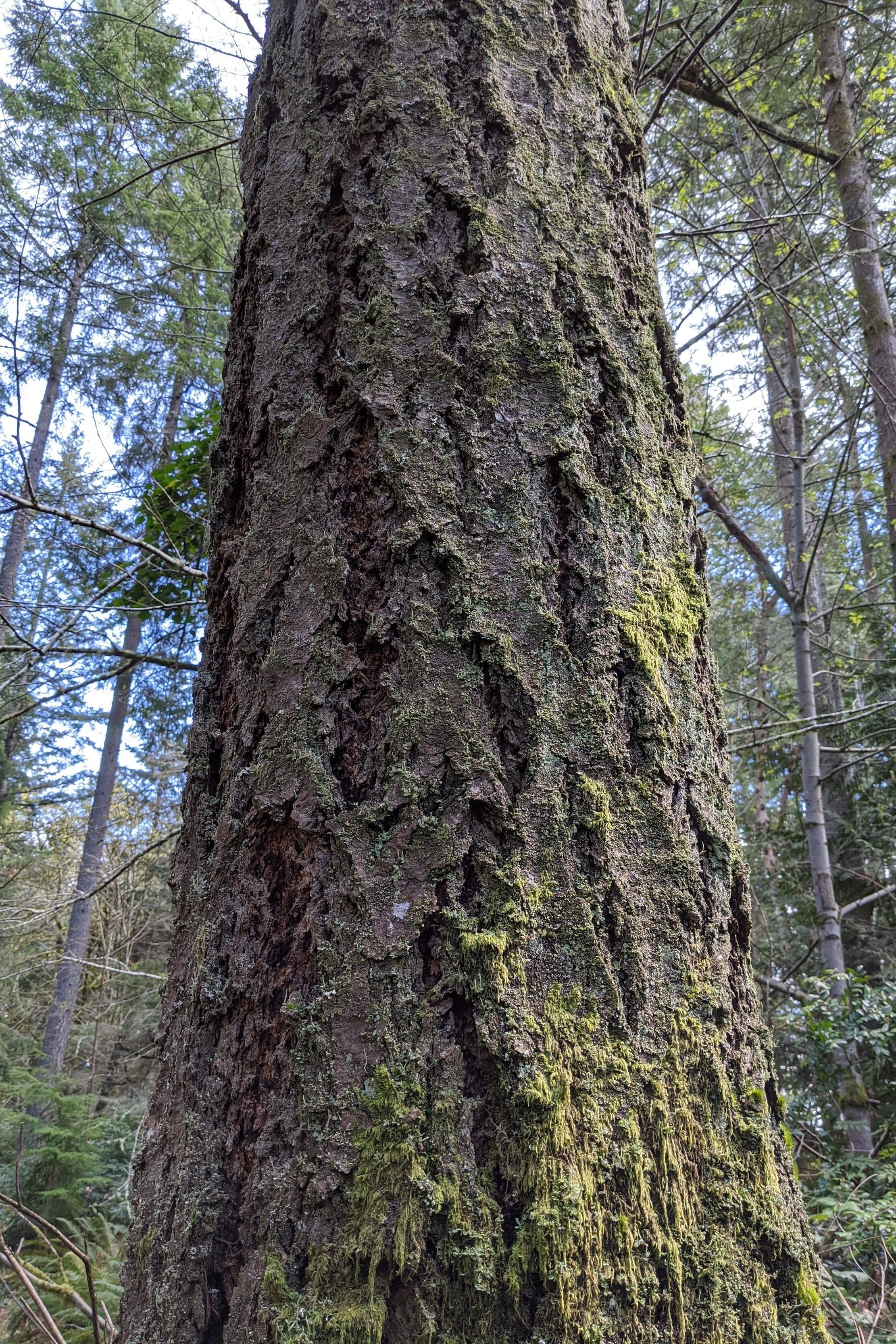
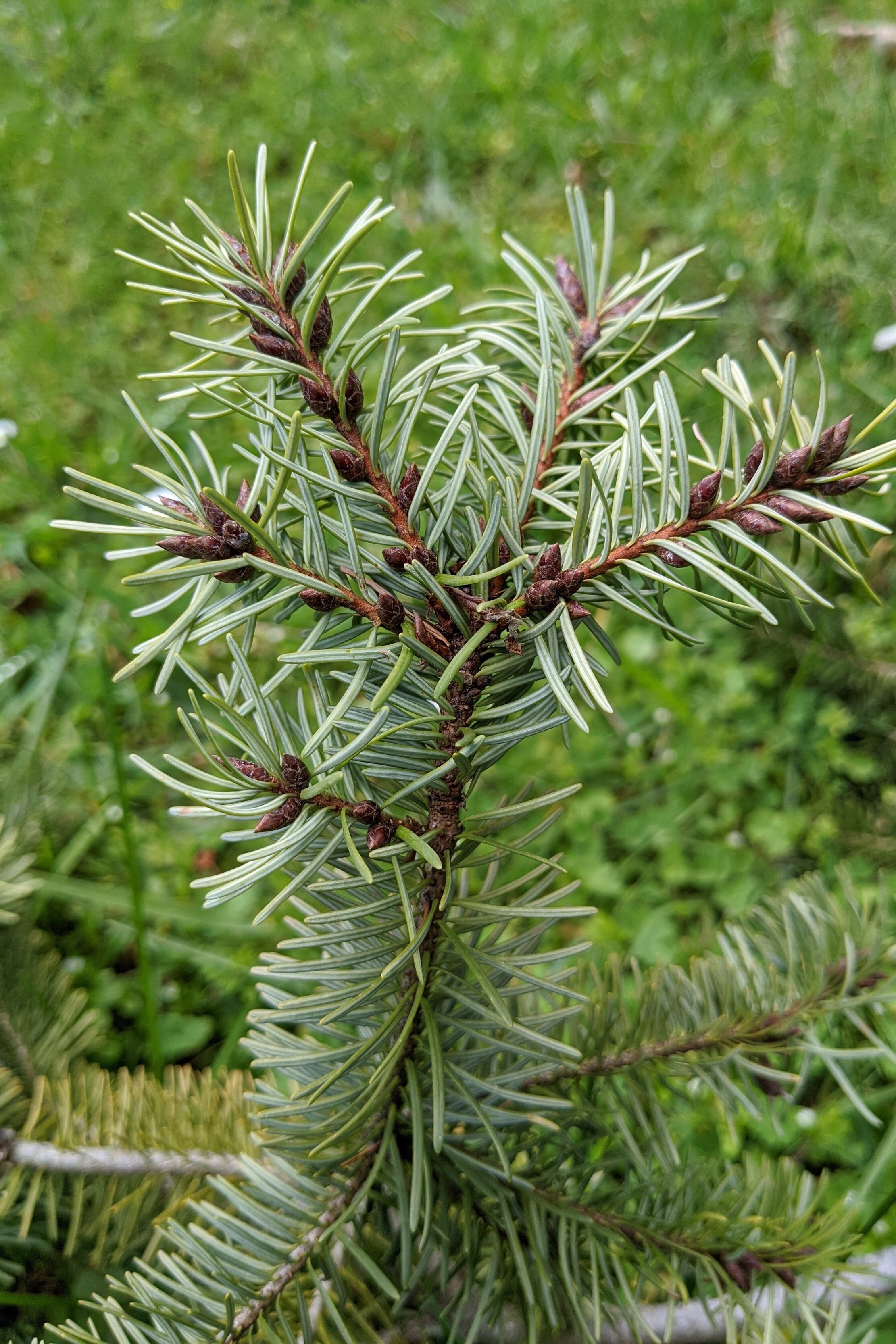
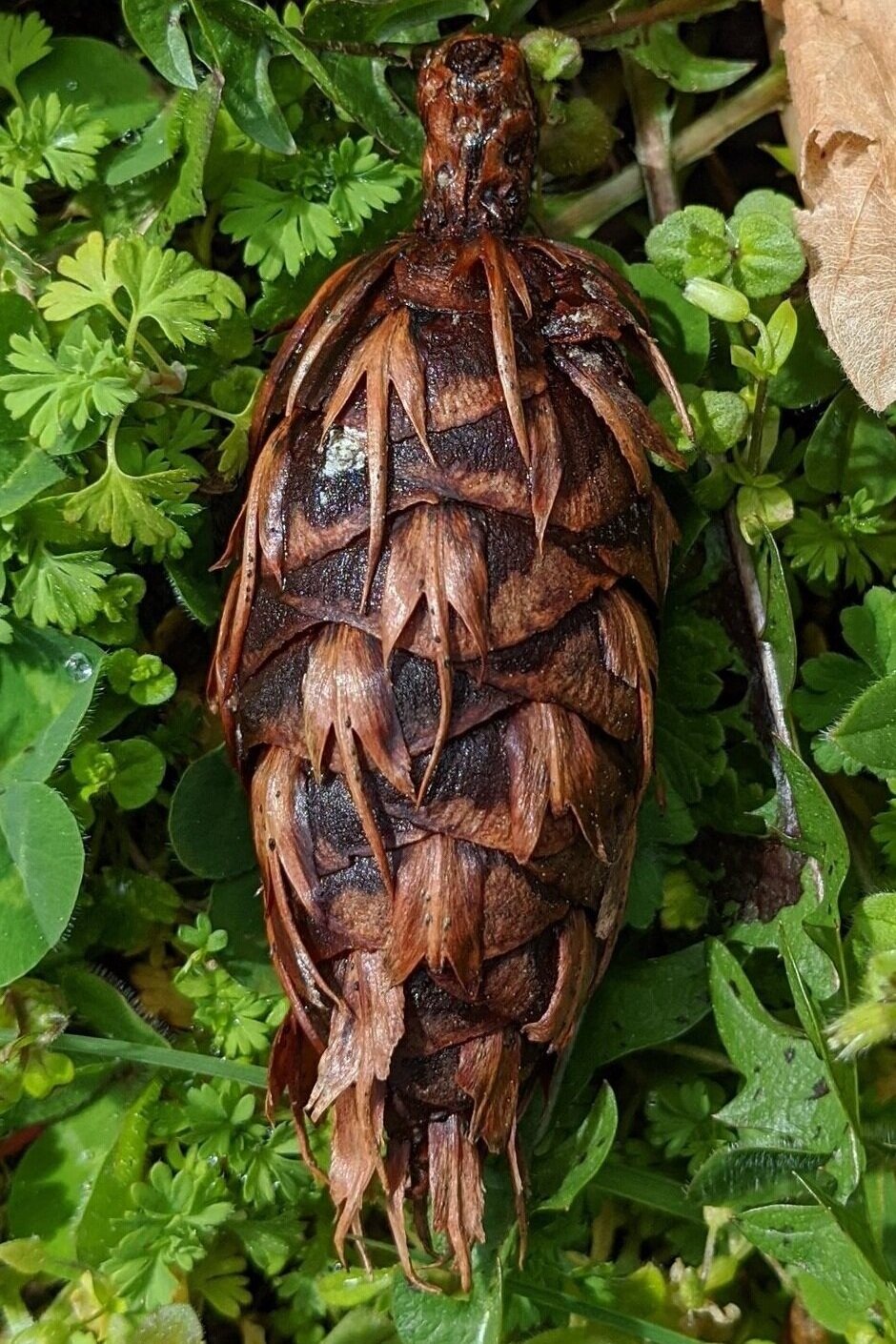
The Douglas Fir (Pseudotsuga menziesii) is a tree with an identity crisis. It is not a true Fir tree. Its genus name, Pseudotsuga, mean false hemlock. In fact, the scientific name of the Douglas Fir has changed over 20 times as scientists figure out what type of tree it truly is. As of now, scientists believe is is most closely related to Larches. It has relatively small needles, thick bark and 3 inch long cones.
The cones have a legend associated with them that may help you identify which cones belong to a Douglas Fir. The legend is that the mice in the forest were trying to find a safe place to get away from a forest fire. After asking many trees that were unable to help, they found a Douglas Fir. They crawled inside the Douglas Fir cones and the tree’s fire resistant bark help save the mice from the fire. So when you look at a Douglas Fir cone you can see the papery “bracts” that look like a mouses hind legs and tail.
Western Red Cedar
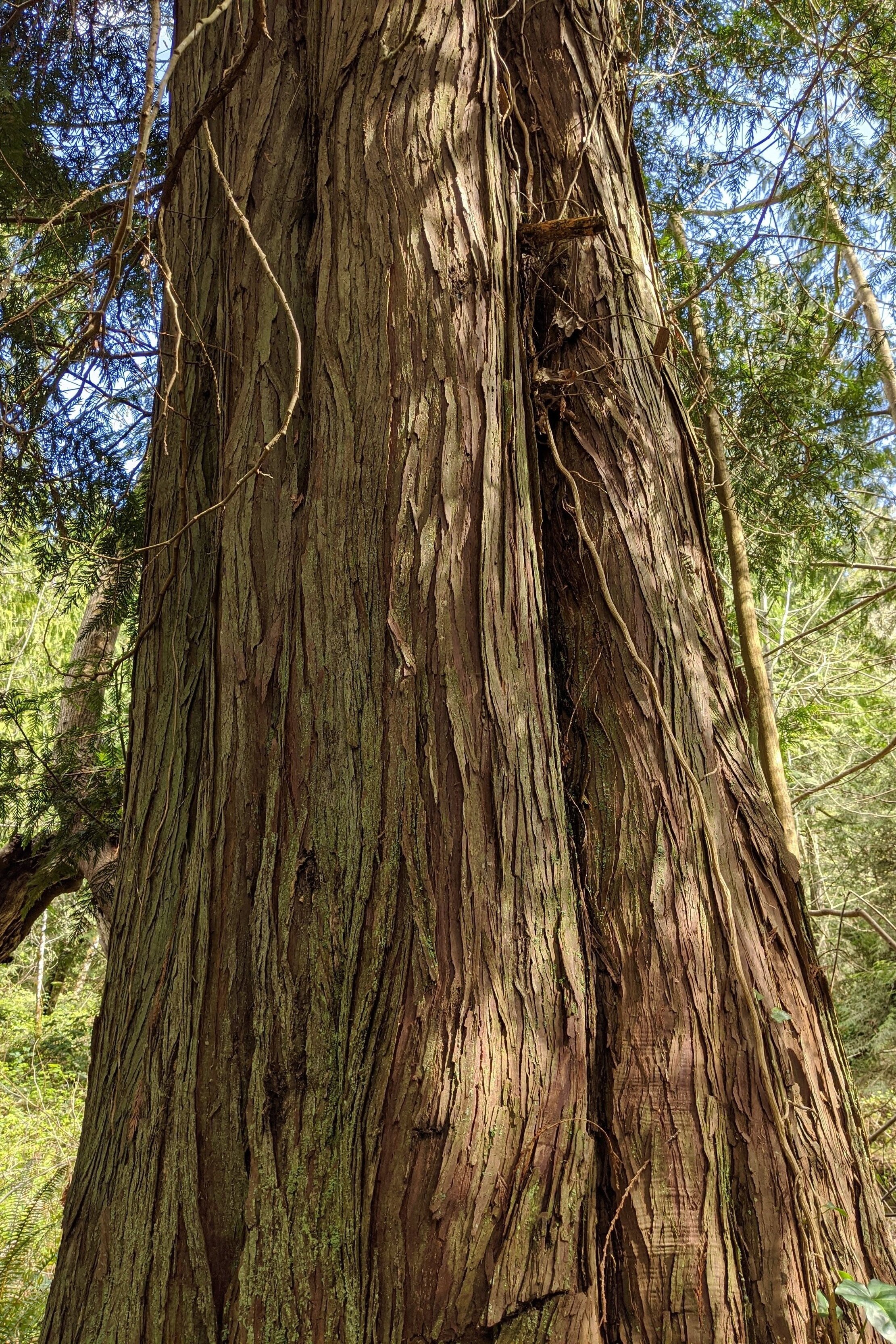
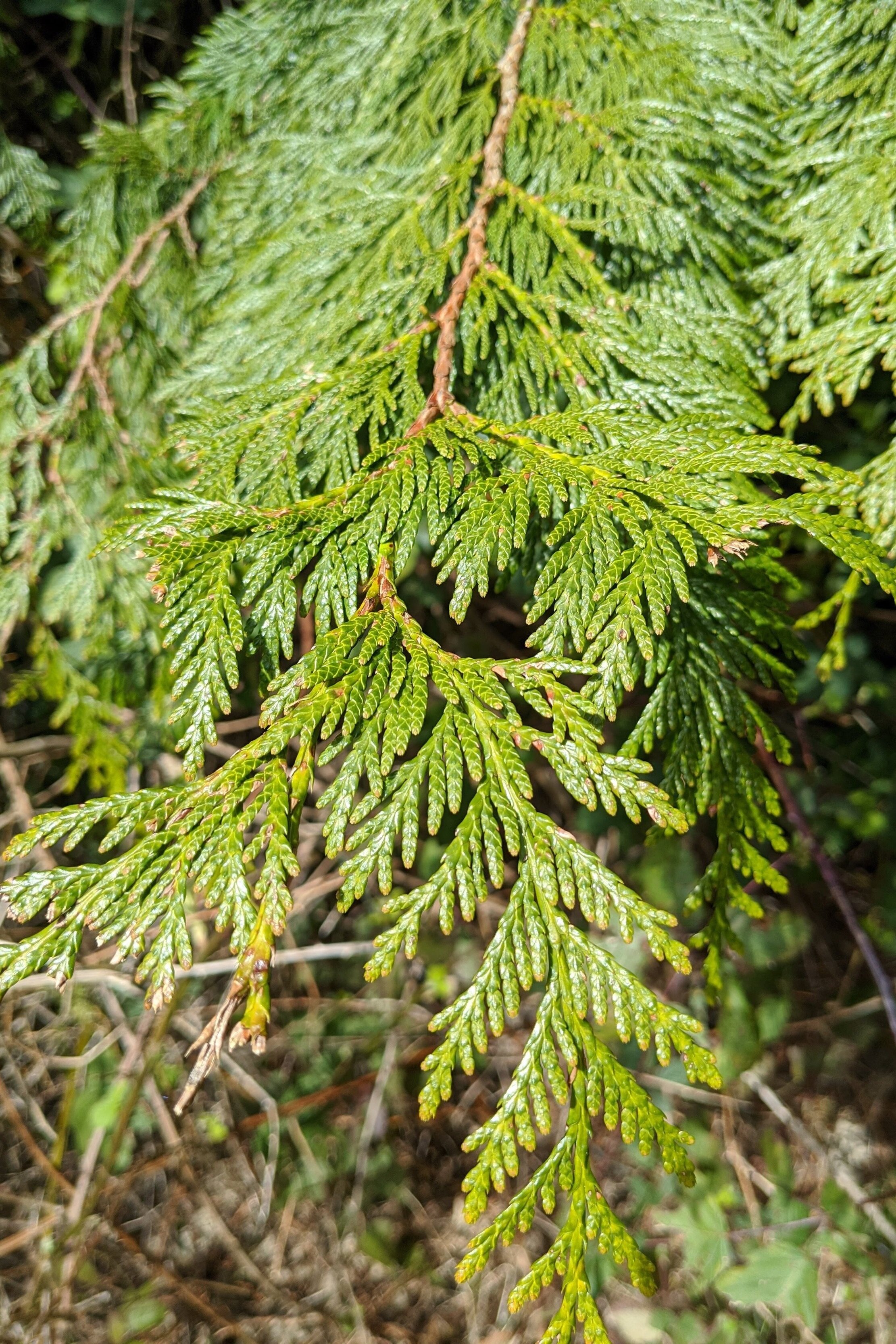
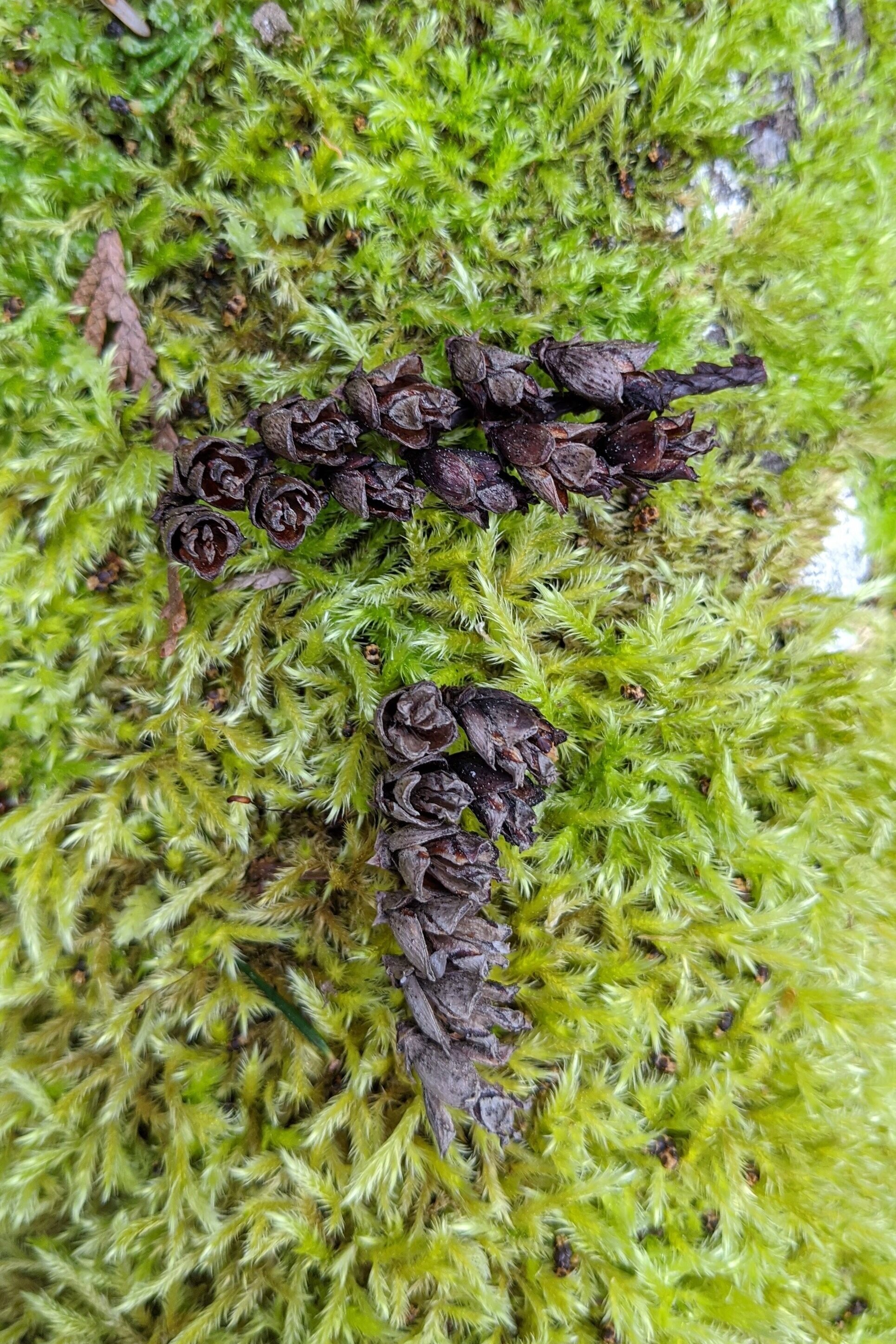
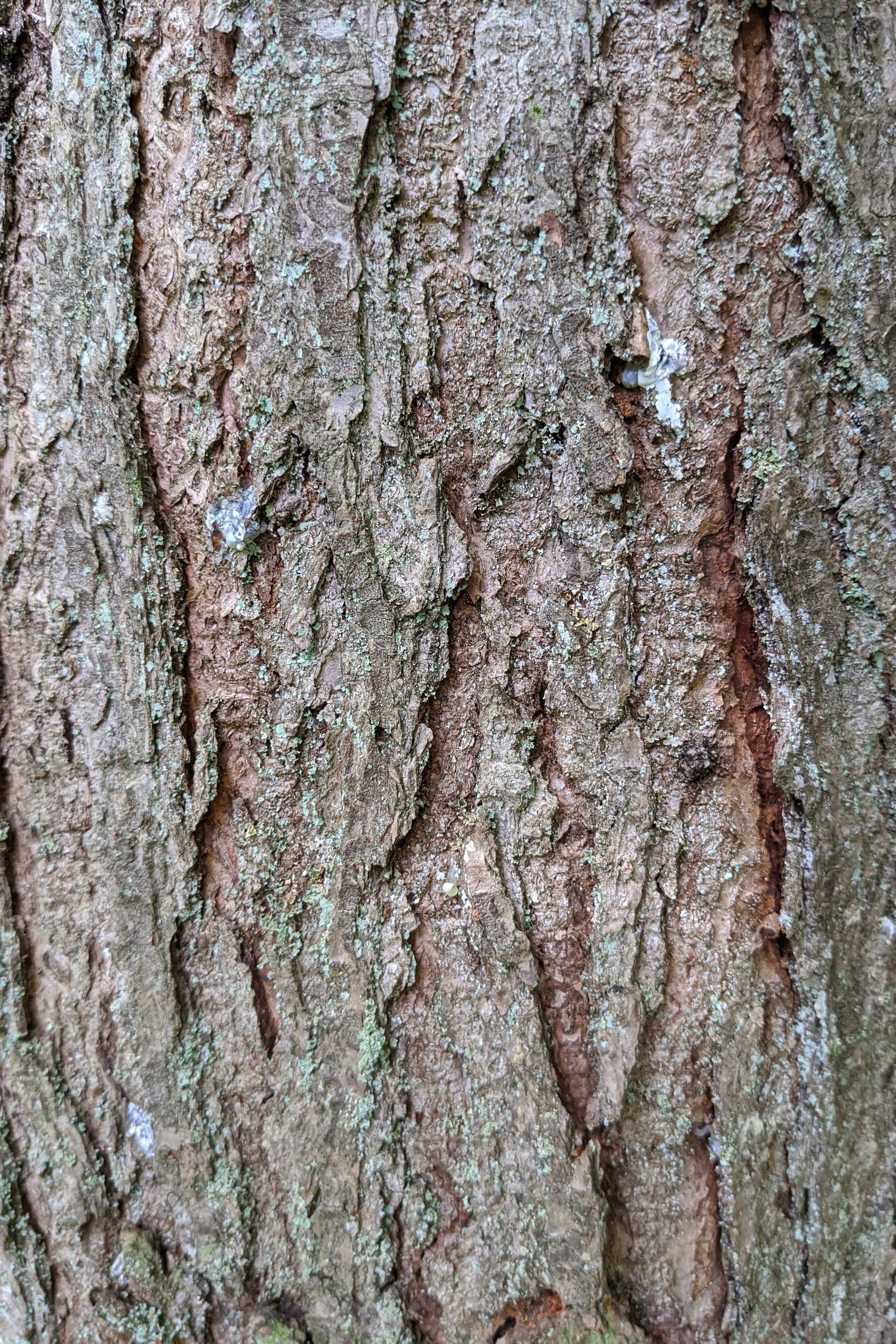
The Western Red Cedar (Thuja plicata) is actually more closely related to Cypress trees than true Cedars. It has reddish-brown bark, scale-like leaves, and half-inch cones that look like roses. It was an incredibly important tree to the Native Peoples along the west coast. The Coast Salish people’s creation story for the Western Red Cedar was that there was a very kind man that would give food and his belongings to help others. When this man passed, Western Red Cedar grew where he was buried so he could continue to help others.
The bark of the Western Red Cedar is stringy and strong, so it was useful for making ropes, baskets and fishing nets. Clothing, blankets and hats were also make from the bark. The wood was used for building many things including totem poles, canoes, paddles, spears, other tools, and longhouses. They also used it cook and dry fish as well as for storing food.
Western Hemlock
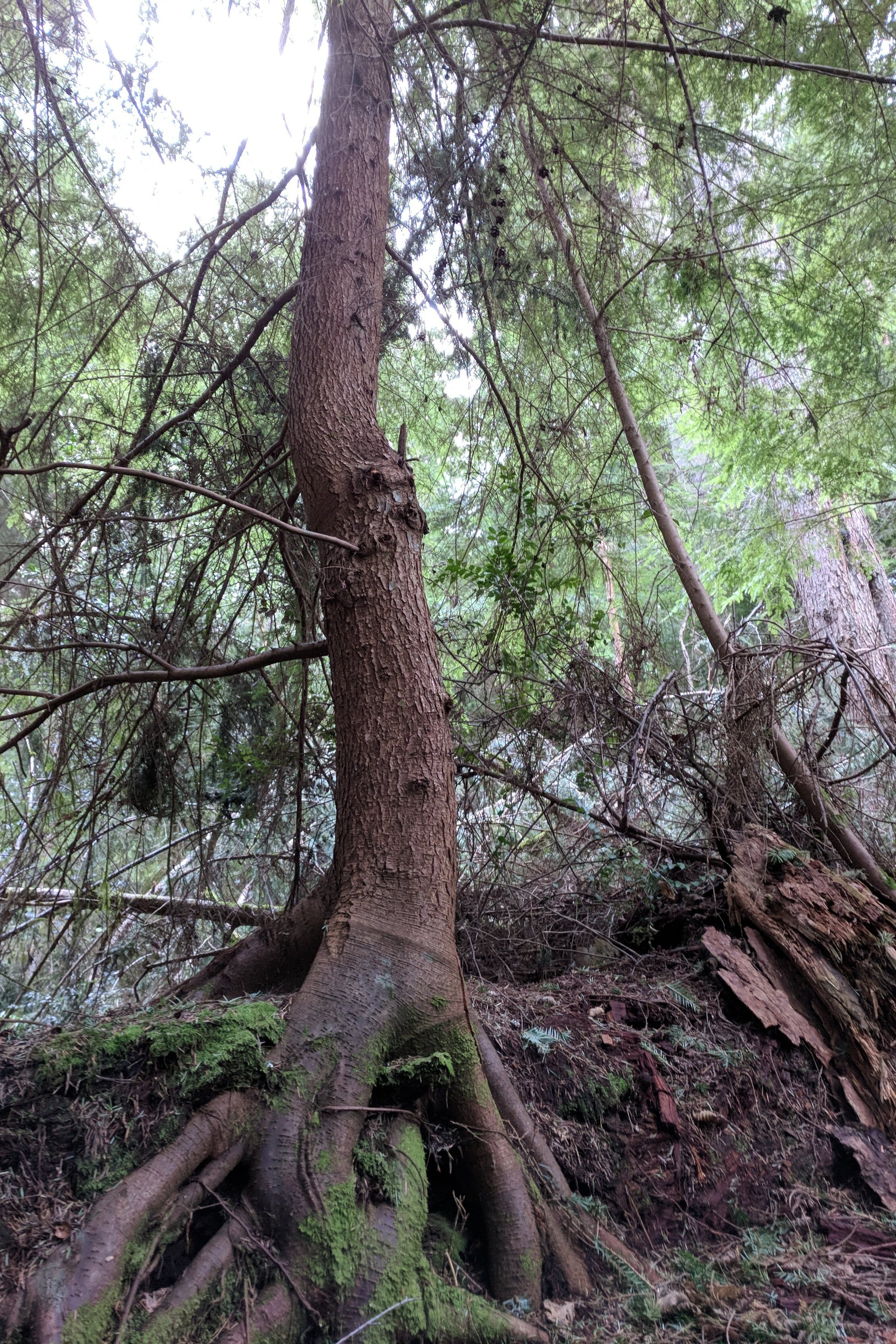
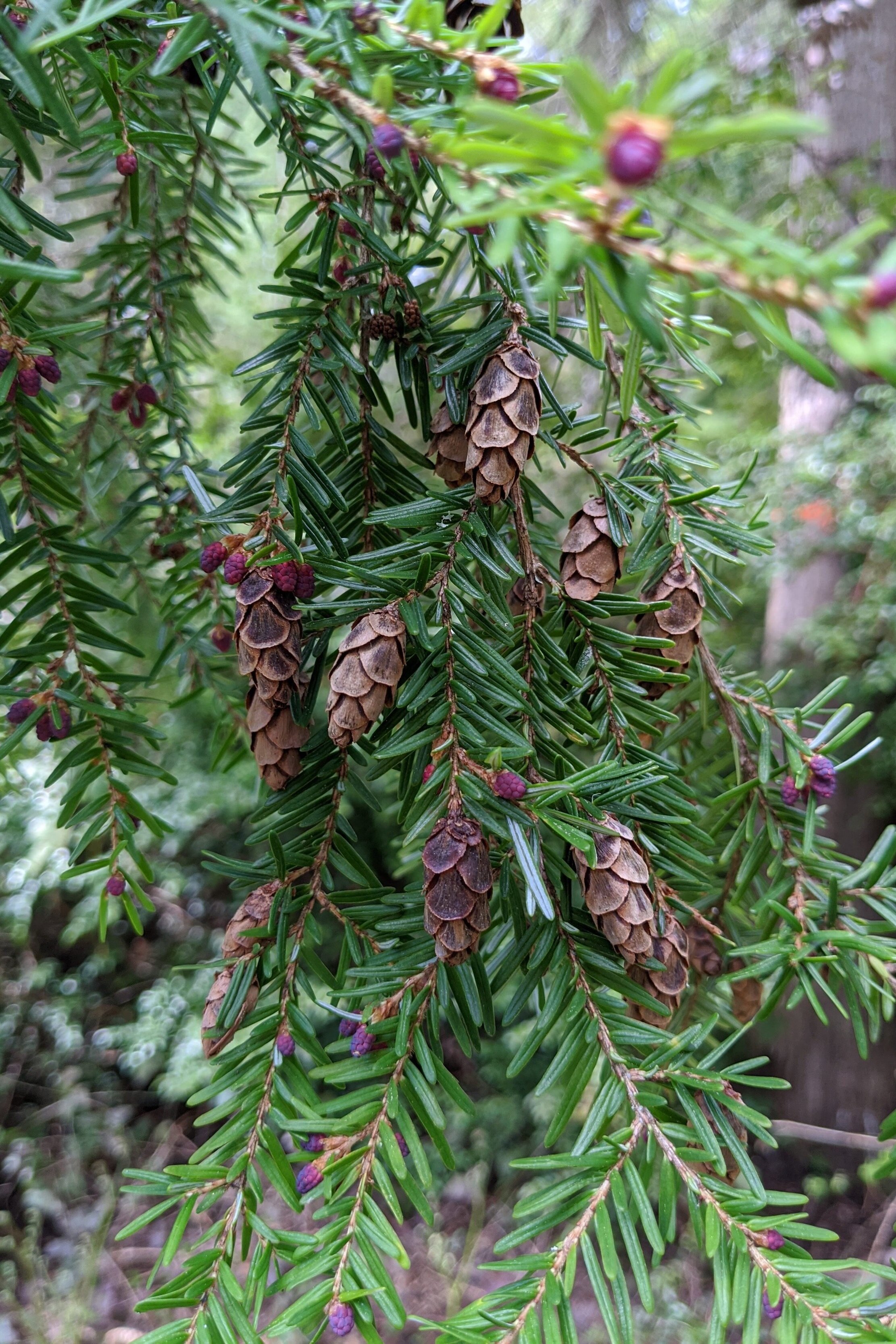
The Western Hemlock (Tsuga heterophylla) is the state tree of Washington. It has small, flat needles, inch-long cones, and grey-ish bark. They are very tolerant of the shade and can grow among the tall Douglas Firs. It also needs a lot of water. Western Hemlocks need soil that has a lot of organic material, coming from other plants and animals, in it. Therefore, we often see Western Hemlocks growing on old stumps or fallen logs. These old trees that grow new plants are called nurse logs. Sometimes when the nurse log decomposes, it leave gaps in the roots of the trees growing in it. This makes it look like the trees are coming out of the ground and walking away.
Leave No Trace
Protect the environment by following these principles
Whenever we spend time in nature, whether it is for a few hours or a few days, it is important to take care of the world around us. This is important not only because we want everyone to be able to enjoy and learn from these spaces but also so we are mindful of everything that lives there. The Leave No Trace Center for Outdoor Ethics has seven principles we should all follow to help protect the natural spaces we love to use.

Photo: https://www.earthriversup.com/leave-no-trace-seven-principles/
If you want to know more, visit https://lnt.org/
Are you an LNT expert? Take this quiz
Salamanders
First of all, thank you so much for reading our posts so far. An even bigger thank you goes out to those who are completing the quizzes. Remember, for those who complete twenty (20) lessons or more (and we're keeping track), there will be a special item of camp swag waiting for them to pick up at camp when we reopen! Shout out to Audrey S and Claira S. for both reaching 20 quizzes completed. Keep it up!
Secondly, I wanted to answer some questions I’ve gotten and have not had time to answer.
From Layla N. about sea stars:”Do sea stars ever lose their stomachs while eating or digesting?”

Sunflower Star Photo: Wikipedia
In the lesson on sea stars , we learned that they take their stomach out of their body to digest their food. When sea stars do this, their stomach is still attached to the inside of their body. Because their mouth/stomach is on their underside, they are also able to guard their squishy stomach with their tough back. This way, their stomach stays safe from predators.
From Molly B. on sea stars: “How long can a sea star live?”
There are many different species of sea stars in the ocean and many have different lifespans. The Sunflower Star only lives up to 5 years where the Ochre Star can live up to 40 years.
From Audrey S. on Tides: “When high tides occur is it possible that the water can create a tsunami?”
Tsunamis happen when there is a sudden large disturbance in the ocean. Primarily, this happens when there is an earthquake. The shaking of the ground pushes large amounts of water, causing a huge ripple that travels long distances. Sometimes tsunamis are incorrectly called tidal waves and this can be confusing because they are not at all related. High tide happens much slower than a tsunami and is a consistent force on the Earth.
Now for Salamanders!

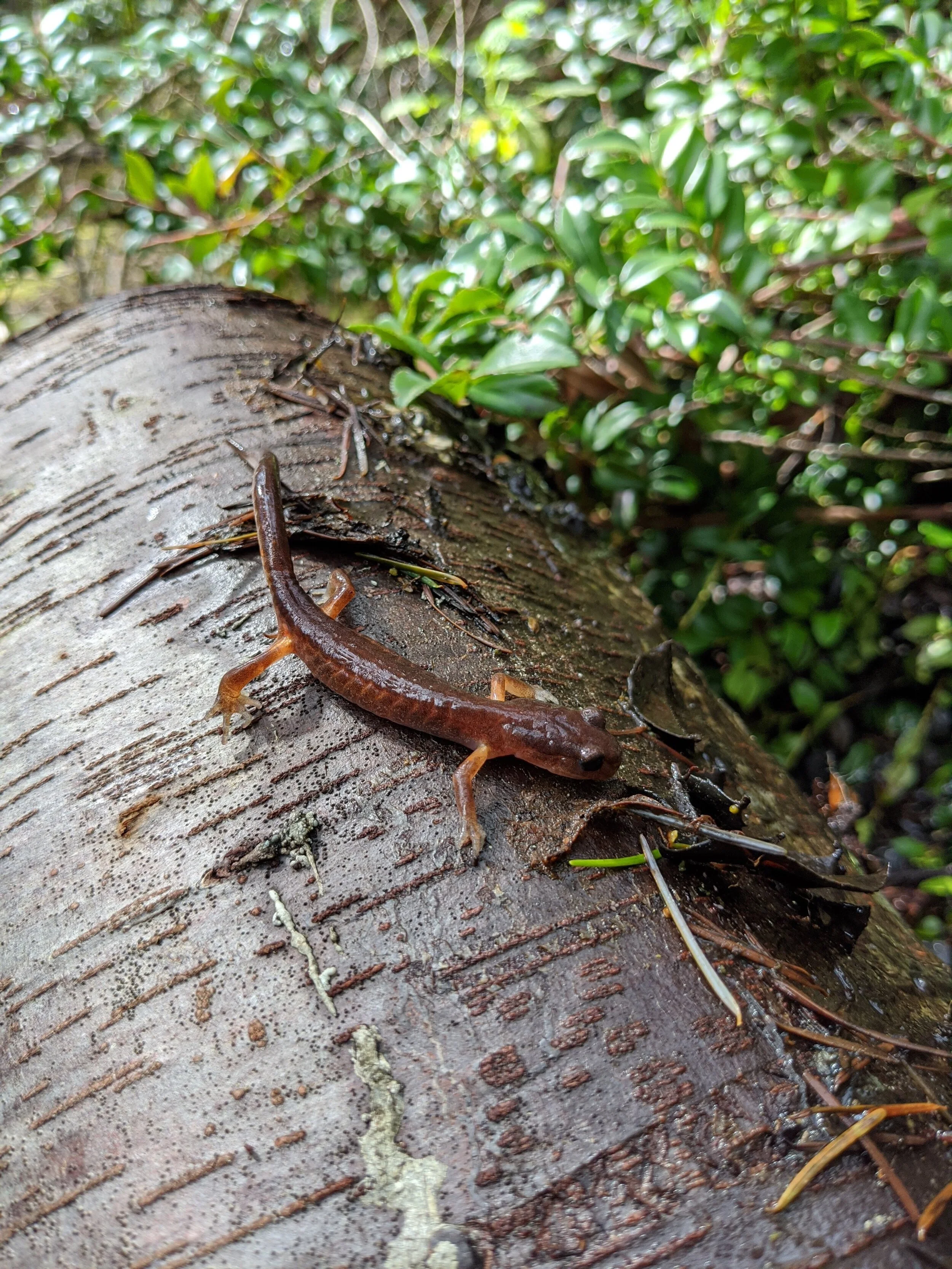
Salamander I found under a log at Sound View

Baby Western Long-toed Salamander (Well it doesn’t have toes yet!) Photo: californiaherps.com
Salamanders are amphibians. In general, amphibians start off their lives in shell-less, jelly-like eggs. When they hatch, they resemble little fish, often called a tadpole. As these baby amphibians grow, they start forming legs. Frogs, another amphibian, will lose their tail but salamanders keep their tail. Amphibians share a few other characteristics as well. They are all vertebrates, creatures with a backbone. They are ectothermic, get their body heat from outside sources instead of producing it themselves. Finally, they have permeable skin, they absorb water and sometimes oxygen through their skin. This also means they can dry out easily so they need to live in wet environments.

Japenese Giant Salamander Photo:outthedoortoexplore.com
Salamanders are a very diverse group of animals. There are 655 known living species of salamanders. A third of these species can be found in North America and Washington state is home to about 14 different species. While many salamanders have four legs, there are some species that only have two. Also, salamanders have three different ways of breathing. Some, like axolotls, have gills for getting their oxygen from the water. Others have lungs they use for getting oxygen out of the air and some just absorb the oxygen through their skin. The smallest salamander, the pygmy salamander, is smaller than an inch long. The largest salamander, the Japanese Giant Salamander, can get up to almost 6 feet long.

Axolotl. See the gills on its head? Photo: livescience.com
One thing all Salamanders have in common is that they are all carnivores. They all eat some type of animal depending on their size, they may eat insects, fish, frogs, mice and even other salamanders. Many salamanders protect themselves by releasing a chemical that tastes bad and is often poisonous. The bright colors on many species are a warning to others that they are a dangerous snack. In addition, some salamanders can lose and regrow their tail. This is another way they can escape predators.
Salamanders and other amphibians are known as indicator species. This means the health of salamander populations is a clue to the health of the environment. Because of their permeable skin, salamanders are very sensitive to environmental changes such as changes in water level, temperature, pollution and invasive species. When the number of salamanders in an area is lower than normal, it is a clue that something has changed in that environment. So, if we want salamanders to stick around and help control the insect population, we must be careful with how we treat our forests.

Tides
What causes the water levels to rise and fall in the Puget Sound?
Twice a day along the Puget Sound the water seems to drain and then refill again. When it “drains” far enough, we are able to learn about some neat animals that call the Puget Sound their home. How does the water level change? Where does the water disappear to? Does this happen in other parts of the world? How do the animals survive out of water for a time? By the end of this post, you will be able to answer all of these questions yourself!
We call the rise and fall of the water in the Puget Sound and in the ocean the tide. The tide happens all over the world but may look a little different depending on where you are. The movement of the water is caused by the gravitational pull of the moon and the spin of the Earth. Jump up into the air. Gravity is the force that brings you back down. That is the gravitational force the Earth has on you. Earth’s gravity is also what keeps the Moon orbiting around the Earth. Because the Moon is also very large and close to Earth, it’s gravitational field effects the things on earth as well. The Moon’s gravity pulls on the water that is on the Earth. So, when the Moon is overhead, the water is pulled slightly towards it. This is high tide. That water is pulled from other parts of the ocean that would then be experiencing low tide. Therefore, when there is less water at low tide, the water does not disappear. It is being pulled toward an are of the earth that is experiencing high tide.

The Bay of Fundy in Eastern Canada has the biggest difference between high tide and low tide Photo: amusingplanet.com

Photo: openstax.org
In this picture, you may notice that there are two high tides on opposite side of the Earth. This is because there are a lot of forces involved that ultimately create another high tide, or tidal bulge, directly across from the first one. If you want to know more about how this works, I recommend: https://scijinks.gov/tides/

Photo: gotbooks.miracosta.edu/ocean
The Sun also affects the height of the tides. When the sun and moon are aligned (New Moon and Full Moon phases). Their gravitational forces combine and we get something called Spring Tides. This has nothing to do with the season we call Spring. During Spring Tides, the difference between high and low is the largest so the tide line “springs” back and forth. The opposite of this is called Neap Tides (Waxing and Waning Quarter Moon phases). This is when the difference between the high and low tide is at its smallest.
Tides happen in lakes as well but lakes are so small and shallow compared to the ocean, we are unable to see the tide difference. In the Great Lakes, scientists have shown that during spring tides, the water level only changes by 5 cm (but it does change!)
Many other factor affect the tide changes around the world including: Wind and weather, geography, and the time of year (seasons).
Tides and the beach
Where we mainly see the the effect of tide is at the beach. When the water is out at low tide, we are able to explore what gets left behind. This also means that some animals are left without fresh sea water for hours. This is also an opportunity for predators, like many shore birds, to find a meal Some animals have shells to protect them from drying out and from predators, others hide under rocks, algae and sand. Because different animals tolerate the loss of water in different ways, we get different intertidal zones. Animals in the spray zone survive better with less water and ones in the low tide zone need to be in the water most of the time. The tidal changes help these areas fresh by taking waste away as the tide goes out and bringing in new nutrients when the tide comes back in.

Intertidal Zones Photo: pathwayz.org

Lichen
Lichen isn’t one organism. It is two working together! Learn more here
Walking through the forest in the Pacific Northwest, you can see many different organisms growing on trees and rocks. Much of what is growing is a primitive plant called moss, which thrives in a damp forest. Another organism is often overlooked or mistaken for moss. This is lichen. Lichen is actually not a single organism; it is two working together. Personally, the way I tell the difference between lichen and moss is moss tends to be a darker green and spongy as it absorbs more water than lichen. When lichen is green, the green is often paler than moss. Some lichen has black on it and some are yellow or orange. Lichen also grows in a wider variety of shapes compared to moss. It can be stringy, leaf-like, or can be flat on a surface.

Moss on top, Lichen on the bottom
Lichen is the combination of fungus and algae (or cyanobacteria) working together. An silly and easy way to remember this is that “Freddy Fungus and Ally Algae took a lichen (like-in) to each other.” The fungus provides the structure and growing space while the algae photosynthesizes, uses sunlight and carbon dioxide to make food. Without the fungus giving the algae somewhere to grow where there is enough sunlight, the algae would not be able to survive in this environment. Without the algae making food, the fungus would not have enough energy to grow.


Relationships between organisms such as these are called “obligate mutualistic” relationships. In a mutualistic relationship in nature, both organisms involved benefit from the interaction. They help each other survive, grow and/or reproduce. Another example of a mutialistic relationship is bees and flowering plants. Bees get nectar and pollen from flowers and in turn help the flowers by spreading pollen to near-by plants. This helps the plants make seeds that will turn into more plants. The obligate part of the relationship means that they need each other in order to survive. The fungus or algae would not exist where they do if they didn’t have their counterpart helping them.
Lichens aren’t only a neat example of two species working together, they are important to the habitat they grow in. Some lichens cause biological weathering, they break rock down into minerals that can be used by plants and animals. They do this by releasing chemicals that wear away the rocks. Also as they grow, their thalli, the part of the lichen that attaches to the surface it is growing on, causes bits of the rock to crack. Lichen also is food for many animals in the forest, including deer. It can be used as nesting material for birds. Lastly, lichen can actually help us learn about pollution levels. It can absorb certain types of pollution and hold it in the thalli. Scientists can then look at the thalli on a chemical level to test for pollution. This process is called lichen biomonitoring.

Use this picture to help you with the first question of the quiz

Poetry
Nature inspires the best poems.
Often, the best poetry is inspired by love or nature - sometimes both. Poets, reflecting on their experiences in the out-of-doors, put their feeling into words - sometimes rhyming and sometimes not. A poem may draw on the wonders of nature but usually, it delves further into the human soul.


Sound View Beach Exploration
See what Katie found on the beach!
On Thursday afternoon, I spent about 3 hours exploring the beach at Sound View. Because my background is primarily in Marine Biology (study of life in the ocean), it was something I wanted to do since I first saw the property. I took advantage of the 1.8 ft low tide at 2pm, grabbed a shovel and hiked down to the beach.

I started my exploration by walking over to the pier. Here are some things I found:


Then I continued along the water line, looking under a few rocks and in the water:


As I continued around to the little cove, I started to dig some holes. Most of the life on a sandy beach is just underground.


The one thing I was really hoping to find was a Moon Snail. I was sad that I did not see one but I saw a lot of evidence that they are present and active along our beach. There were a lot of clam shells with Moon Snail made holes in them as well as many empty Moon Snail shells.


Here are a few last images of things I found along the beach:


Bow & Arrow
Study the pictures and learn a little bit about archery.

This is a re-curve bow.

This is an arrow.

This is a target.

Great JOB!
Otters!
You otter know they are my favorite!
Happy Friday! I’ve made it two weeks without talking about my favorite animals,otters. It is finally time for me to share about these incredibly cute, playful and ferocious creatures.

Otters belong to the Mustalid family with weasels, badgers, ferrets, and wolverines. Mos animals in this family group tend to have long bodies, round ears and thick fur. There are 13 species of otter around the world. We have 2 species native to this area: the North American River Otter and the Sea Otter.
North American River Otter

These otters can be found all over North America along rivers and other bodies of water. They even venture in to the Puget Sound and the Ocean. Like all otters, they are excellent swimmers, propelling themselves with their rudder-like tail and webbed feet. They are carnivores (meat-eaters) and eat pretty much whatever they can catch: fish, frogs, crabs, insects and even small mammals. They tend to live alone or in pairs but will often have playful social gatherings. Because of their playfulness, a group of river otter is called a “romp!” Although the North American River Otter is not endangered, their population has declined. The main threat they face is habitat destruction. As humans build, they loose their river habitat. They also only live along healthy waterways. Polluted water means less food and unsafe conditions for otters. It is important to protect them because as predators, they keep many populations of animals healthy.

Sea Otters
Sea Otters are found along the Pacific Coast. They once ranged from Mexico to Alaska and were also found on the coast of Japan. Because of their incredibly thick and soft fur, they were almost hunted to extinction. Since then, their population has risen a little because of conservation efforts. However, they are still endangered. Like River Otters, Sea Otters eat almost whatever they can get their hands on. Scientists have seen that different populations of Sea Otters have different food preferences based on where they live. They also are important for managing the population size of many animals. This, in turn, helps protect kelp forests because many otters eat animals that eat kelp, like sea urchins. Some otters eat so many sea urchins that their teeth turn a little purple! Because, Sea Otters play such an important role in keeping their habitat healthy, they are known as “keystone species.” This term refers to the top stone in an arch that holds an arch together. Without that “keystone” the whole arch would fall apart.
In an effort to not ramble about Sea Otters, here are a few of Katie’s favorite Sea Otter facts:

Sea otters need to eat 25% of their body weight every day.
They have the thickest fur of any mammal. Make an “OK” symbol with your hand. An area the size of the circle you thumb and pointer finger make may have up to a million hairs. Many humans only have 100,000 hairs on their whole head.
Otters are incredibly smart and with use rocks as tools to crack open shells. They may even have a favorite rock that they old in their armpit.
Sea otters spend a lot of time on their back and will “raft” up with others by holding hands or wrapping their bodies in kelp.
What is that mammal in the water?

It is often hard to tell which marine animal you are seeing in the water because you may only see head from a far distance. Kurt already taught us how to tell the difference between Harbor Seals and Sea Lions: http://www.soundviewcamp.com/nature-blog/2020/3/15/difference-between-seals-and-sea-lions
In comparison to the Pinnipeds, otters are much smaller. If you see one in the Puget Sound, it will be a river otter. Sea otters stick to the coast but have been seen in the Salish Sea, around the San Juan Islands. River otters also spend more time on land than sea otters. Sea Otters are visibly larger that River Otters. One last difference is that Sea Otters spend a lot of time floating on their backs where river otters only swim belly down.
Plankton
They provide most of the Earth’s oxygen, are the base of the food chain, can glow in the dark, and range in size from microscopic to 100 feet long but they cannot swim against a current. Learn about plankton here!

First, a question from Audrey S. about Sea Stars: “Can Sea Stars mate and have children?” Yes! Sea Stars do something called broadcast spawning. They release their babies into the water where the young sea stars will float around as Plankton until they settle on the sea floor. Perfect introduction to today’s post: Plankton!
They provide most of the Earth’s oxygen, are the base of the food chain, can glow in the dark, and range in size from microscopic to 100 feet long but they cannot swim against a current. Plankton are one of the most important creatures to the ocean yet most people know very little about them. To be completely honest, I didn’t care about plankton until I took a class about them in college. It taught me how interesting and diverse plankton are as well as the role that plankton play in the ocean and in the rest of the world.

The character Plankton from Spongebob Squarepants was inspired by a real life zooplankton called a Copepod
What are Plankton?
The word “plankton” come from a Greek word that means “wanderer” or “drifter.” Plankton are classified as a organism (animal, plant, algae, bacteria) that cannot swim against a current. If it can swim against a current it is called “nekton,” meaning “swimming.” Organisms that stay on the sea floor without swimming are called “benthos,” meaning “bottom of the sea. Plankton are often divided into 2 categories: Zooplankton and Phytoplankton. The smallest plankton are single-celled and microscopic. The largest plankton is a sea jelly (jellyfish) called a Lion’s Mane Jelly which can reach over 100 feet in length.
Phytoplankton
Plankton that produce their own food by photosynthesis, using the energy from sunlight to make food. These are often single-celled bacteria and algae. Phytoplankton are important for a few reasons: Scientests believe they are responsible for producing most of the breathable oxygen that is in the Earth’s atmosphere. They are also the supporting base of the ocean (and of freshwater ecosystems) food chain. Without them, humans and other animals may not exist.
Zooplankton
These are plankton that need to eat other things in order to survive. They range from single-celled to sea jelly. Many animals in the ocean start off their lives as zooplankton and become nekton or benthos as they get larger. Sea stars, crabs, snails, anemones, barnacles, fish and more make the transition from plankto to nekton as they grow up. We call these animals “meroplankton.” “Mero-” means part so they are plankton for a part of their lives. Zooplankton are equally important to the food chain. They eat zooplankton and become food for larger animals.

The blue glow of bioluminescent plankton.
There are a few exceptions to these categories because some plankton produce their own food AND eat other plankton. What would you call these plankton that belong in both categories?
Bioluminescence
Many plankton are capable of producing light. (Bio=life, -lumin=light, -escence=state of being) Most that do this, produce the light by releasing chemicals that react to each other. In this reaction,a little light is produced. Scientists are still not 100% sure why they do this but the leading theories include: avoiding predators and attracting a mate.
49 Words to Paint a Picture
Learn the meanings of some of the terms used to describe Sound View’s ecosystems.
In their fall newsletter, the Nisqually Land Trust summarized Sound View Camp using forty-nine words…

It is quite a feat to take any pretty place and try to describe it with words. Because this article was written with nature lovers in mind, especially those who wish to keep places like Sound View preserved for all time, the description uses specific terms. Let’s break it down….

Drayton Passage is part of Puget Sound. A “passage” is a way from one point to another so barges often use Drayton Passage to or from Olympia. This passage is bound by Anderson on the east and the Key Peninsula (where Sound View is located) on the west.
Mature Forest ecosystems are dry to moist forests dominated by conifer or deciduous tree species over 80 years old.
A wetland is a distinct ecosystem that is flooded by water, either permanently or seasonally, where oxygen-free processes prevail. The primary factor that distinguishes wetlands from other land forms or water bodies is the characteristic vegetation of aquatic plants, adapted to the unique soil.
Embayments are "protected estuaries and lagoons within which there is too little wave action to form beaches. A barrier embayment would require a barrier beach to protect it, We generally refer to this beach as a sand-spit.
A lagoon is a shallow body of water separated from a larger body of water by barrier islands or reefs.
A Feeder Bluff is a coastal cliff or headland that, through erosion and weathering, provides sediment to down-current beaches. The sandy cliffs to the south of Sound View are the feeder bluffs.
Salt marshes are coastal wetlands that are flooded and drained by salt water brought in by the tides. They are marshy because the soil may be composed of deep mud and peat. Sound View’s lagoon includes a salt marsh.
Tideland is land covered by water at high tide and uncovered at low tide. For Sound View, this represents quite an area.

There, you have it! Take the quiz to see what you know.
Sea Stars
Learn about sea stars here!
Before we talk about sea stars, I want to answer a few questions sent to me about anemones. Claira S. asked “Can anemones sting humans?” Yes, however there are very few anemones (and none in the Puget Sound) that have a painful sting. Instead, the stickiness you feel is the anemones stinging you our relatively thick skin protects us from the extremely weak “stings.” Audrey S. asked “Do all anemones have stinging cells?” As far I I know all anemones have stinging cells because this is how they catch their food. The amount and strength vary by species.
Now for our next Marine animal post: Sea Stars!

Ochre Sea Stars
Wait…Sea Stars? I though these were Starfish…
You can call them either name. I personally prefer using the name Sea Star because they are not fish, they are a type of invertebrate called and Echinoderm. (With this reasoning, I should also say Sea Jellies instead of Jellyfish but I have not been able to make that switch yet…)
The group of animals called Echinoderms include sea stars, sea urchins, sea cucumbers, and sand dollars. The name echinoderm means “spiny skin.” All animals in this group have some form of sines on the outside of their body. Other things these animals have in common is that they all use “tube feet” in order to move and have pentamerous radial symmetry, they can be “cut” evenly in five different ways.
The “spines” on sea stars are generally very small. For the sea stars pictured above are the white dots. These spines help protect sea stars from predators such as birds, fish crabs and otters.

They move around the sea floor using what are called tube feet. On the bottom of sea stars are hundreds of suction cups that are powered by the water that the sea star brings into its body. Not only do they use these tube feet to move, sea stars also use them to open clams and mussels. They grab onto the outsides of the clam or mussel shell and pull until the clam/mussel becomes too tired to hold their shells together. This is when the sea star takes its stomach out of it’s mouth to digest the inside of the clam/mussel.
Sea Star don’t just dine on mussels and clams. They also eat barnacles snails, sand dollars and sea urchins. Some sea stars even eat other species of sea star! They are important predators the sea floor, helping control populations of the animals they eat.
Lastly, sea stars also have incredible regenerative properties. As long as they still have most of the center of their body, they can regrow the rest of their body! Some times sea stars accidentally grow an extra arm in this process.

Sunflower Star eating a clam. You can see the white stomach coming out of the mouth
Anemones
Plant? Animal? Sea monster? Learn what an anemone is here!
Often found in clumps on rocks and pier pilings, Anemones can be difficult to spot if you don’t know what you are looking for. They are frequently mistaken for plants because they are stuck in place to a rock and some species are green. However, they are animals. Anemones are marine invertebrates, animals that live in the sea and do not have a backbone.

Here are some Aggregating Anemones. The blue arrow points to an open one. The red arrow points to one that is closed. Some anemones will cover the outside of their bodies with shells and sand for protection.

The stinging cells, or nematocysts, are like miniature harpoons that fire when something touches them
Anemones are closely related to jellyfish and coral. All of these animals share the common trait of having stinging cells called, nematocysts (ni-mat-uh-sists). The strength of these stinging cells depend on the species. The sting of the Lion’s Mane Jellyfish is very painful whereas you may not even feel the sting of a Moon Jelly. The “sting” of most anemones makes their tentacles feel sticky when you touch them. To a small fish or crab, however, the sting could be fatal.
Anemones are generally stuck in one place their whole lives. Because of this, they are opportunistic eaters. They will eat whatever floats by them that they can catch. Mostly they eat plankton (small drifting animals, algae, and bacteria), small fish, crabs, snails. Anemones only have one opening for their digestive system; so after they eat an digest their food, the leftover waste exits the same way the food entered.

Some anemones get food through a relationship with a type of single-celled algae called zooxanthellae. Often seen in the large solitary anemones, this partnership makes anemones appear bright green. The algae uses sunlight to produce food that the anemone can use. In turn, the anemone gives the algae a safe home in the sunlight.
Even though an anemone’s stinging cells offer great protection, they are preyed upon by a number of animals. Some sea slugs, fish, sea stars and sea turtles are able to overcome the sting to have some anemone for lunch.

Finding Polaris
The best directional star is Polaris - also called the North Star - because if you know where north is, then you can guesstimate the other cardinal points.
I must go down to the seas again, to the lonely sea and the sky,
And all I ask is a tall ship and a star to steer her by;
Thus begins the poem, Sea Fever, by John Masefield. But where do we find that “star to steer her by” when the sky is so full of them?
The best one is Polaris - also called the North Star - because if you know where north is, then you can guesstimate the other cardinal points.
If you are facing Polaris then…. behind you is south … to your right is east …. and to your left is west.
But, how do you find Polaris? Luckily, among all of the constellations in the night sky, one of the easiest to find is the Big Dipper.

Do you see the Big Dipper? A dipper is like a scoop. You should be able to see the bowl part as well as the handle in the night sky. All of the stars in this constellation are quite bright.

The wonderful thing about the big dipper is that the last two stars that make of the “bowl” of the dipper are “pointers” that will help you locate Polaris (the North Star). Follow the pointers, Merak and Dubhe, until you find a reasonably bright star. That star is Polaris.
On a really dark, starry evening, you will be able to notice the two dippers pouring into each other! Sound View Camp is a great place for stargazing because the sky isn't cluttered with city lights that make stars hard to see.
If you have hours to lay back on a warm night, you will notice that Polaris does not move as the other stars do. That’s because the Earth spins on its poles and Polaris appears situated over the North Pole. You will be able to see Polaris from dusk to dawn to steer your ship all through the night.

The Compass Rose
Discover more about the directions you can go.
This is a rose.

This is a compass rose.

The compass rose works in tandem with a compass needle which always indicates north. For years, sailors and navigators referred to the direction one was going (or coming from) in relation to the cardinal points of a compass. North, South, East, and West. This created some pretty interesting terms that navigators had to memorize and understand. If a ship’s captain needed the vessel to go south south east (SSE), then the helmsman would need to understand and turn the ship so that the needle of the compass pointed to the right place on the compass rose.

Orienteering Compass
Over time, these archaic terms have been replaced by the use of “degrees”. We know that a circle has 360 degrees and if we designate north as 000, then east would be 090, south would be 180, and west becomes 270. This is way easier, wouldn’t you agree?
At Sound View, we teach students and campers orienteering with a particular type of compass perfect for adventures in the woods. We also send a compass out on canoe trips in case a fog rolls in. A canoe heading west will eventually come ashore near enough to Sound View to be safe.
This compass rose will help you with the quiz.

FBI Part 3: Invertebrates
Last member of the FBI: Invertebrates

Happy Friday! Welcome to the third and final post in our FBI decomposer series. We have already learned about how fungus and bacteria help break down waste and turn it into nutrients. If you missed them you can read them here:
Fungus- http://www.soundviewcamp.com/nature-blog/2020/3/18/fbi-part-1
Bacteria- http://www.soundviewcamp.com/nature-blog/2020/3/17/fbi-part-2-bacteria
The reason the “I” in the FBI of decomposers stands for “invertebrates” and not “insects” is that the term “insect” only includes the animals with 6 legs, 3 main body sections, and an exoskeleton. Even though that includes many decomposers such as: ants, termites, beetles, and flies, it leaves out other important decomposers such as: millipedes, slugs, worms, and the so called “rolly-pollies.” What all of these decomposing animals share in common is that they do not have a backbone. Therefore, they are all invertebrates. Invertebrates decompose by eating plant and animal waste. Then, the waste that the invertebrates produce gets added to the soil where bacteria, fungus and plants can use the nutrients. Invertebrates are also a great food source for other forest animals.
Try at home:

You can discover what type of invertebrates you have in your yard by creating a pit-fall trap to catch them.
With adult permission, find a small container such as a cup or a used soda bottle. Dig a hole big enough for your container to fit in. After you put the container in the hole, surround the top of it with a few small rocks and place a piece of wood or bark on top. Check your container everyday to see what is inside. Remember to gently release your invertebrates so they can continue decomposing! Let us know what you catch!
FBI Part 2: Bacteria
How do Bacteria help the forest grow?


Next on our FBI list is Bacteria!
First, a quick recap from yesterday. If you missed it you can see it here: http://www.soundviewcamp.com/nature-blog/2020/3/18/fbi-part-1
Decomposers are organisms that break down organic material and turn it into nutrients for others to use. Most decomposers are members of the FBI: Fungus, Bacteria and Invertebrates. Yesterday we learned that our first decomposer, fungi, are different than plants because they cannot make their own food. Also thanks to Simon T. for this great fungus pun: “What did the little brother say to his big bro Augustus “It’s time for fun, Gus!”
When we hear of bacteria, often our first though is of the ones that make us sick. However only a small amount of the total bacteria in the world is bad for us. We have over 500 types of good bacteria in our gut, helping us digest the food we eat. Most are extremely important in making sure ecosystems keep running. In fact, one type of bacteria, called Prochlorococcus, is responsible for about 70% of the oxygen available to us. So take a deep breath and thank the good bacteria for all that it does for us.
Go to your kitchen and find a teaspoon. If you were to fill the teaspoon with soil from the forest, there would be over 100 million bacteria in there. In general, soil bacteria fall into 4 categories based on what they do.
The first and largest group are the decomposers. These are the bacteria that break down waste from plants and animals, turning it into nutrients plants can use. Some of these bacteria can also help get rid of pollution in the soil. Other bacteria exist on the roots of plants, helping turn nitrogen into a form that plants can use. Thirdly, some bacteria get their energy from other chemicals that may exist in the soil. These bacteria can break down minerals that plants need as well as help get rid of pollution. The final group of bacteria are the ones that cause diseases in plants. Even though there are bacteria that make plants sick, there are far more that plants rely on in order to survive.
FBI Part 1: Fungus
Who cleans up waste in the forest?
Thank you to everyone who has been reading our posts and taking the quizzes so far! Shout out to Claira S. and Audrey S. for correctly answering our bonus question from the Banana Slug post. From Claira: “Animals that eat dead plants and turn it into soil are called decomposers!”
The next three lessons will be about some decomposers. The term “Decomposer” can be applied to much more than just animals. Any living organism that breaks down waste from another organism and turns it into nutrients in the soil is a decomposer. In other words, decomposers are nature’s best recyclers!
The top decomposers in the forest are the FBI. No, I’m not talking about the government organization. In this case, FBI stands for: Fungus, Bacteria, and Invertebrates. These organisms help keep our forest and other ecosystems healthy by returning nutrients back into the ground. Today we will be learning about fungus!

Photo from Study.com Decomposers Lesson for Kids


The fungus you may be most familiar with is a mushroom. Maybe you have seen them on a hike in the forest or maybe you ate some for dinner last night, however, the mushroom is only a small part of what a fungus is. Yeast, often used in bread making, is another example of a fungus. If you don’t eat your bread fast enough, you may find it growing another type of fungus: mold. Fungi are different from plants because they cannot photosynthesize, or make their own food using energy from sunlight. Instead, they must get their nutrients from other organic sources, such as plants and animals. When they do this, some fungi leave behind nutrients for plants to use. This makes them decomposers
Not all fungi are decomposers. Some get nutrients from living organisms and others form a partnership with algae (This is called: lichen. We will explore that in another post!)
For fungi that produce mushrooms, most of the fungus is actually underground or within the log that it is decomposing. This part is called the Mycelium and is what does the decomposing. Next time you turn over a log, look for the white, stringy mycelium. The mushroom is more like the “fruit” of the fungus, helping it reproduce. Mushrooms release spores, like the “seeds” of the fungus, that may settle in another part of the forest where a new mycelium might start to grow.
Try at home: You can make a mushroom spore print! https://www.sciencefriday.com/educational-resources/mushroom-prints/
If you do, send a picture of your print to education@soundviewcamp.com and we may feature it in a future post!