

Phylum Chordata
Learn about the animals that are in the same phylum as humans


The last of the major animal phyla is the one that we belong to: Chordata. Most species in this phyla are vertebrates, having a backbone. However, phylum Chordata has two subphyla of invertebrates: the tunicates and the lancelets. There are about 57,000 vertebrate species, 3,000 species of tunicates (Subphylum Tunicata), and 30 species of lancelets (Subphylum Cephalochordata).
The word “chordata” means “having a string or cord.” Therefore, the defining feature of phylum Chordata is the notochord, or “back cord.” All Chordates at some point in their development have this rod made of cartilage (the same material that is in our ear lobes). The notochord is located in the back of chordates and supports the nerve cord that is parallel to it. The nerve cord exchanges signals between the brain and the rest of the body. In vertebrates, the notochord is replaced by a spine made of cartilage or bone. Tunicates only have the notochord when they are young. When they become adults, they lose it and either settle down on the ocean floor or stay free floating in the water. The lancelets keep the notochord throughout their lives.
All chordates at some point in their development also have pharyngeal slits. These are openings in the throat area that early chortates used to filter feed, like today’s lancelets do. In fish, many of the pharyngeal slits form into gills that are used to get oxygen from the water. In other vertebrates, these slits turn into features in the face and throat such as a jaw, jaw support structures and parts of the inner ear.
One more feature that all chordates have in common at some point in their life is a tail that extends beyond their rear. The tail has no organs in it. In many vertebrates, this tail does have a continuation of the spine and muscles. Tunicates, frogs, humans, and apes lose their tail as they develop.

Phylum Echinodermata
Learn about the “spiny skin” creatures

Sand Dollars on Sound View beach
During low tide here at Sound View, you can see thousands of dark purple disks sticking out of the sand and if you are lucky, you may even find a star in the sand. Additionally, there are probably some tiny and fragile stars crawling through the mud under the water. These animals are all echinoderms. Echinoderms are a group of invertebrate animals that exclusively live in salt water. This phylum includes six thousand species of: sea stars, brittle stars, sand dollars, sea urchins, sea cucumbers. They come in a wide range of shapes, colors, and sizes. Though they are very diverse, they have many characteristics that link them together.

Spines and Tube Feet of a Sea Urchin Photo: https://en.wikipedia.org/wiki/Tube_feet
The name of the phylum, echinodermata, means “spiny skin.” Many echinoderms do have spiny skin, however some do not or have fake spines, like in many sea cucumbers. To an echinoderm, salt water isn’t only something they live in, it is their blood, source of oxygen, and used in their movement. Echinoderms have a “water vascular system.” this means the use water from the ocean in place of blood. They bring the water into their body through a madreporite, or “mother pore.” The oxygen in this water is brought and used by different parts of the body. They also use the water to power their tube feet. The tube feet look like a tube with a suction cup at the end. They use their hundreds of tube feet to move around, hold on to surfaces, and to move food towards their mouth. In the case of many sea stars, they also use their tube feet to pull on mussel/clam shells until the mussel/clam becomes too tired to hold its shells closed. Then the sea star will take its stomach out of its mouth and digest the inside of the mussel/clam.

Leather Star on Sound View beach
All echinoderms have pentaradial symmetry. This means that their bodies have five identical sections. You can see this most easily in sea stars because they will generally have five arms or five sets of arms. There are a few exceptions to this, such as the Six-rayed Star that can be found on Washington’s coast. Occasionally, a sea star may lose an arm to a predator. All echinoderms have incredible regenerative, or regrowing, powers though. So a sea star with a lost arm can grow it back and sometimes they accidentally grow an extra one. Sea cucumbers show of their regenerative powers as well. If they feel threatened, they will eject their guts so they can escape while the predator eats their guts. They can later regrow their lost body parts. Sea urchins and sand dollars can regrow parts of their body as well, especially lost spines or tube feet.
Echinoderms are incredibly important to ocean habitats. Sea cucumbers, sand dollars, and brittle stars eat dead material and bacteria on the sea floor or floating through the water. This helps recycle nutrients just like a decomposer does in the forest. Sea Stars are top predators of many ocean habitats. They help control the populations of mussels, clams, barnacles, sea urchins, sand dollars and more. Sea urchins are known for devouring kelp forests, especially when their population is not controlled by predators. They are a favorite food of sea otters. Although they do not look tasty with all those spines, humans eat urchin as well. It is commonly used in sushi and is called “uni.”

Phylum Arthropoda
Insects, spiders, crabs and more. Arthropods make up about 80% of all animal life!
The largest animal phylum is Arthropoda. Scientists have identified five MILLION different arthropod species currently living on Earth! This is about 80% of all living animal species. There may even be millions more because Arthropods are everywhere and many are so small it can be difficult to tell if they are different from another species.

Grasshopper Molting Photo: https://math.scholastic.com/issues/2017-18/101617/the-magic-of-molting.html#1090L
So, what are Arthropods? Chances are you have seen at least one today. The phylum Arthropoda includes all insects, crabs, spiders, centipedes, millipedes, shrimp, and more. All of these animals share a few features in common. One of these features is their jointed legs. This is what the phylum is named for: “Arthro-” means ”joint” and “-pod” means “foot.” Their body is also made up of segments. Many arthropods, like ants and flies, have three segments: head, thorax, and abdomen. Some arthropods, like millipedes, have way more than 3 segments and some, like spiders, have less. Spiders have a cephalothorax (head-chest) and an abdomen.
Without their joints, arthropods would have trouble moving around because their body is covered by a hard outer shell called an exoskeleton. The arthropod exoskeleton is made of chitin (KIE-tin). Chitin is similar to the protein that makes up our hair and nails, keratin. The chitin exoskeleton covers the whole body of arthropods, protecting them from predators and preventing them from drying out. This exoskeleton probably helped make arthropods the first land-dwelling animals. The exoskeleton does make the growing process interesting for many arthropods. They grow larger within a rigid, smaller shell. In order to grow, arthropods must shed, or molt, their exoskeleton. When crabs do this, for example, they back out of their too small exoskeleton and then fill their body with water, expanding their new outer shell. Now their new shell is a little too big for them and they have some room to grow. When they molt, their new shell is soft and they are more vulnerable. They need to find a place to hide until their new exoskeleton hardens. Molting also gives animals a chance to regrow a lost leg or antennae.

Photo: https://wdfw.wa.gov/sites/default/files/publications/00028/wdfw00028.pdf
All Arthropods go through metamorphosis, or changing of their body shape. A baby arthropod often looks very different from the adult. The classic example of this is a caterpillar turning into a butterfly. The young form of an arthropod, after they hatch from their egg, is called a Larva. Then, depending on the arthropod, they may have a nymph or pupa stage before becoming an adult. I really like the metamorphosis of crabs because larval crabs, or zoea, are basically unicorns.
Arthropods are extremely important to all life on Earth. All arthropods are food for other animals, including other arthropods. Even humans eat arthropods: crab, shrimp, lobster, and many different insects! Many zooplankton are arthropods, controlling the phytoplankton population and acting as prey for many larger marine animals. Many arthropods are also decomposers, helping recycle nutrients in an environment. Arthropods also pollinate flowers, helping plants reproduce. Even spiders, an arthropod that is a common fear among humans, is extremely important in controlling populations of other arthropods such at mosquitoes, flies, wasps, and more. Think about this the next time you feel the need to squash a “bug” or a spider. Escort it back outside instead.
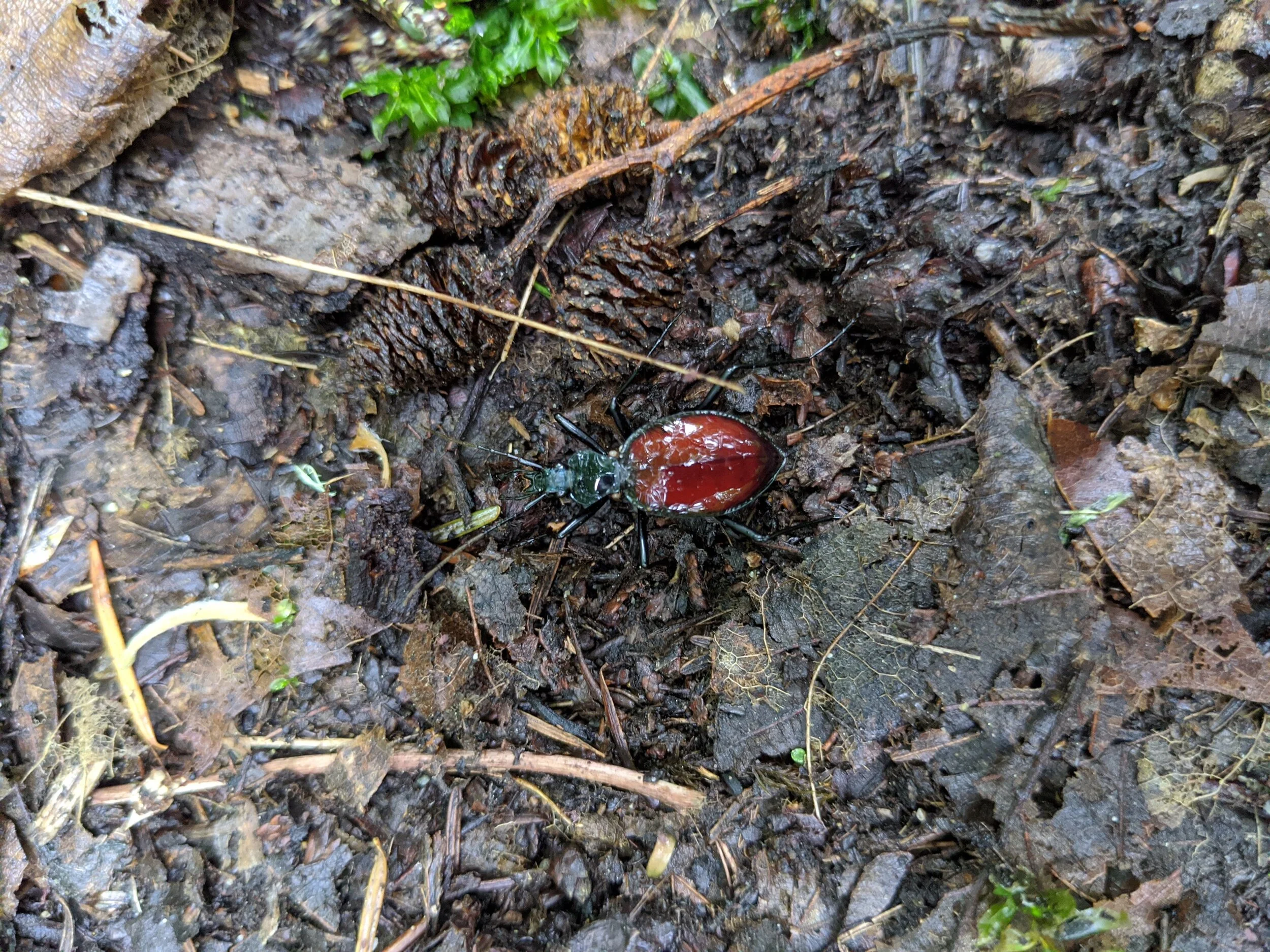
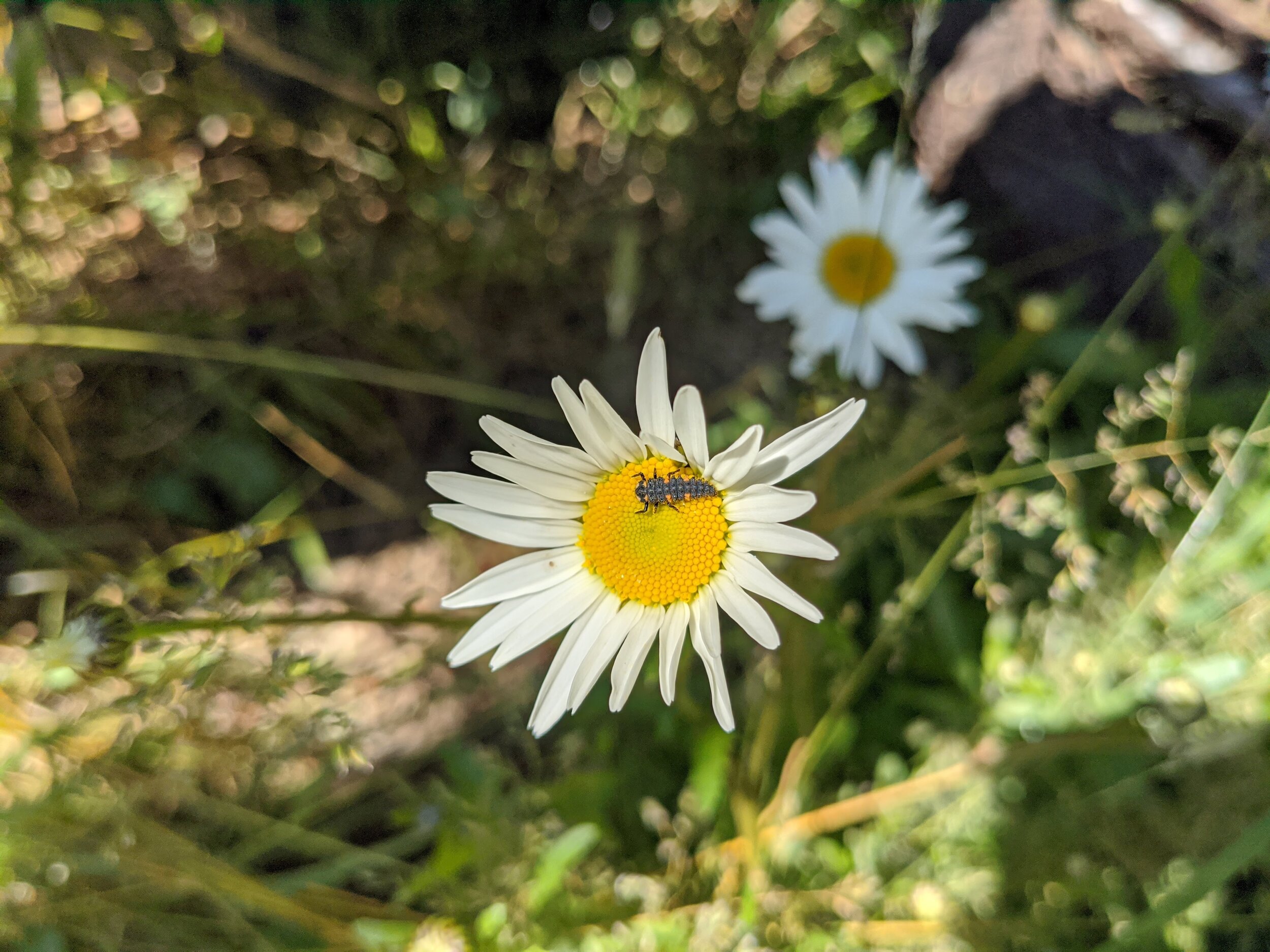
Here are a few arthropods I have photographed at camp:




Worms!
The wriggly world of worms!
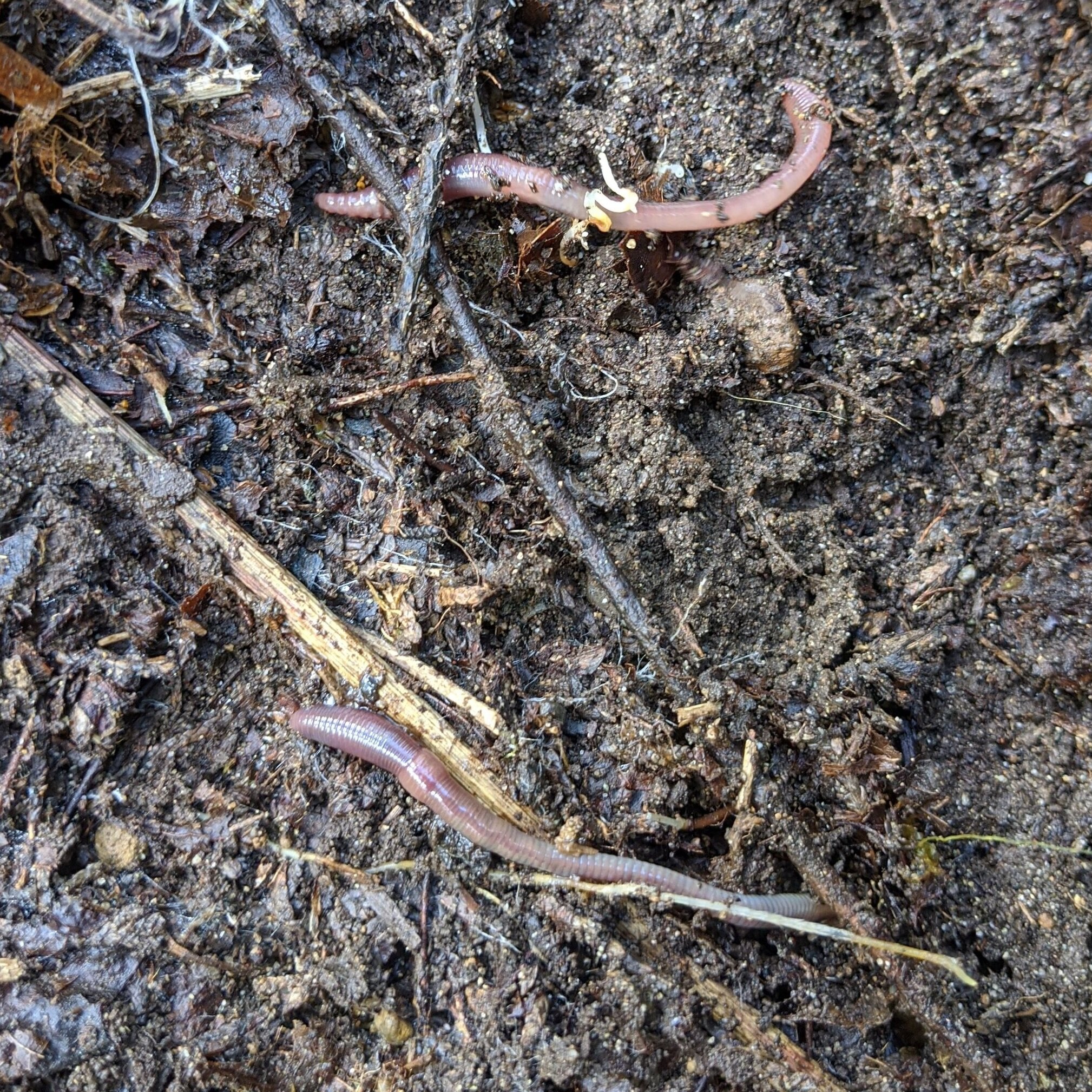
Earthworms at camp
When flipping over logs or digging in your backyard, you are likely to find an earthworm hiding from predators in the moist soil. Earthworms are a very important part of the forest, helping decompose matter to recycle the nutrients in the soil. They are also often used in compost systems to break down fruits and veggies into compost that can be used in a garden. Although there are over 1,800 species of earthworms, they are just a small portion of the worms on Earth. Worms are common in many environments all around the world. Marine worms are some of my favorite creatures to find when exploring the beach.
The animals we call “worms” actually belong to nine different phyla. The most common worms are found in three of those phyla: Platyhelminthes, Nematoda, and Annelida. All worms are invertebrates, having no bones. Most worms have head and tail ends, as well as simple organs. They even have a simple brain.
Platyhelminthes

Can you find the eyespots? Photo: https://www.nwnature.net/hood_canal/index.htm
This is the phylum of flatworms. Flatworms can live on land or in the water (salt and fresh). Many are parasites, feeding off a host animal. Some flatworms live symbiotically with other organisms, helping their host in some way and gaining food from them. The species that live without a host are predators, eating other small animals. Non-parasitic flatworms are small, generally no more than four inches long. Occasionally, if I am lucky, I find a flatworm on the beach under a rock or shell. I like these worms because they look like they have eyes. They are not complicated eyes like we we have, but they are known as eyespots and can detect light and dark. While the flatworms I usually find blend in with the rocks, there are many marine flatworms that brightly and beautifully colored.
Nematoda

Caenorhabditis elegans is often used in scientific experiments studying DNA GIF: https://manoa.hawaii.edu/exploringourfluidearth/
These roundworms may be the most common worm in the world. If you have never seen one it may be because many free-living roundworms are very small, often microscopic. Nematoda means “thread-like.” However, there can be thousands in a small handful of damp soil. Roundworms can be herbivores, carnivores, or parasites. They are the simplest animal with a one-way digestive system. Their food enters in a different place from where their waste leaves, unlike Cnidarians and Platyhelminthes. If the environmental conditions around them are bad, roundworms can go dormant. They will wake up once the conditions are right again.
Annelida

Polychaete on camp’s beach. Do you see the segments?
This phylum of worms is likely the one you are most familiar with because it includes earthworms. Annelida comes from a Latin word meaning “rings.” This is the phylum of segmented worms. Look closely at an earthworm and you will see their body appears to be made of rings that are stuck together. The lines on their body separate the segments of the worm. They have more advanced organs than the other two worm phyla I have mentioned, including a closed circulatory system where their blood stays in hearts and blood vessels instead of just floating around the body. They have five heart-like organs! Leeches are another member of this phylum. We can also find many Annelids on our beach, from the Polychaete “Clam worms” underground to the tube worm tubes sticking out of the sand or attached to the pier pilings. Polychaetes are another favorite of mine to find because the look like they have little legs. These legs are called setae and are bristle-like projections that help them dig through the sand. I have to be careful when pulling them out of the ground because some species have a venomous bite. Also, because they are segmented, they break easily. This is actually a strategy to protect themselves. If a predator gets a hold of the worm, the worm can break and then regrow their lost part of their body.

Phylum Mollusca
This post is brought to you by the Banana Slug and its soft-body friends

Banana Slug
What do snails, clams, and octopuses all have in common? As members of the phylum Mollusca, they all have soft bodies. “Mollusc” comes from a Latin word meaning “soft.” Mollusks can be found in many habitats all over the world. They can live in fresh water, salt water, or on land. Because of their soft body, they do require some moisture to survive. However, there are a few snails that have adaptations that allow them to survive in dry deserts. Mollusks produce a mucus (slime) to retain moisture and to help them move around. Mollusca is the second largest invertebrate (animals without a backbone) phylum, with a species count of around 100,000. Members of the phylum Mollusca that live in the ocean make up about one fifth of all named marine species.
Mollusca is a very diverse phylum. For most generalizations you can make about members of this phylum, there are often many exceptions. For example, most mollusks have a shell or a remnant of a shell. This is not true for many slugs and for octopuses though. There is also on class of Mollusks called Aplacophora, which literally means “without a shell.” These are all worm-like mollusks that live on the bottom of the ocean.
Most mollusks have three body sections: a head, a foot, and a mantle (body cavity). In the head, most mollusks have a radula and a simple brain. The radula is like a rough tongue that mollusks use to scrape and grind their food. (Clams do not have a radula). Mollusks have a simple nervous system that has one nerve chord for the foot and one for the mantle. They come together near the head in a ring shaped collection of nerves, their brain. The esophagus, where food travels from the mouth to the stomach, runs through the center of this brain ring. The mantle, or body cavity, contains their organs, including: their gills for breathing, heart(s), digestive system, and reproductive system. This is also the part of the body that makes the shell, if they have one. The foot is a muscle used for moving around and attaching themselves to surfaces. For squid, octopus, and cuttlefish, their “foot” is modified into tentacles that primarily help them eat. They use a siphon, or small tube shaped hole in their body, to move by pushing water through it.

Limpet
The largest class of mollusks is Gastropoda, which means “stomach foot.” This includes sails and slugs. They make up about 80% of all mollusks and are incredibly diverse. They come in all sorts of shapes, sizes, and colors. Common Gastropods around camp include: Banana Slugs, Moon Snails, Garden Snails, Nudibranchs (sea slugs with their gills on the outside of their body), and Limpets (dome-shaped marine snails).

Horse Clam
Another common class of mollusks we see is Bivalvia. Clams, Mussels, Oysters, and Scallops are all members of this class. Bivalves are known for having two shells that strongly hold together, protecting the soft body inside. These mollusks do not have a head or radula. Instead they use siphons to filter feed as they bring water into their body. Through doing this they also help clean the water around them. This does mean though that if there are toxins in the water, they will collect these toxins in their body. For the bivalves that dig, like clams, their foot is modified to help them dig into the sand. We can find Pacific Oysters, Bay Mussels, and many species of clams on our beach.
Squid eggs
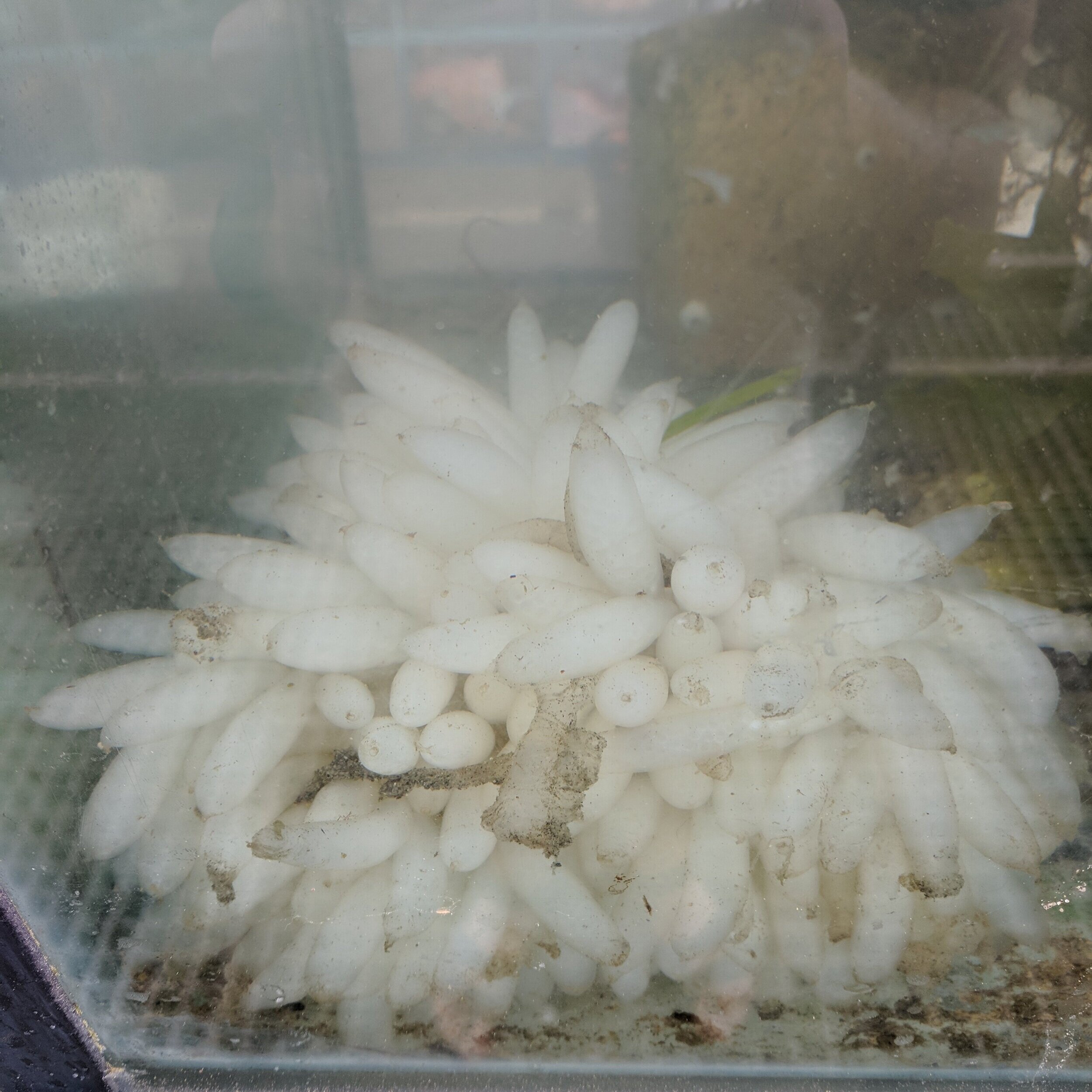
Octopuses, squid, cuttlefish, and nautilus all belong to the class called Cephalopoda, meaning “head foot.” This class contains the smartest of the mollusks. Octopus have been known to solve puzzles and escape aquariums. Their radula is modified into tooth-like structures and their foot is modified into tentacles. Many can change color for camouflage and communication with members of their species. In squid and cuttlefish, their shell is a support structure just under the skin of their mantle. Octopus have lost their shell completely. The Puget Sound is home to the largest species of octopus, the Giant Pacific Octopus. Market Squid also frequent the Puget Sound. If you are lucky, you can find squid eggs on the beach at low tide.

Black Leather Chitons
One more type of mollusk you may be able to find on our beach is a chiton. Chitons are a lot like limpets but instead of one shell, it has eight shell plates. Their class name, Polyplacophora, means “many plates.” This gives them more flexibility. If they are removed from a surface, they can roll up into a ball to protect their soft body. They can be difficult to spot as many blend into the rocks and they look like a fossil.
Speaking of fossils, because of their shell, mollusks are abundant in the fossil records. This has helped scientists learn about the history of many mollusks.

Phylum Porifera
Sea Sponges!

Can you find the little Red Nudibranch on this Red Sponge?
Our next phylum in the Kingdom Animalia is Porifera. Phylum Porifera is the phylum of sponges. These are not the rectangular sponges you may have in the kitchen nor do they live in undersea pineapples. Most of the 5,000 identified sponge species do live in the ocean. Only about 150 of the recognized species live in freshwater. Unlike Spongebob, members of the phylum Porifera spend most of their lives attached to a surface such as a rock. The only time they move around is at the beginning of their lives when they are free-floating larvae. However, as larvae, they cannot control their movement against a water current.
Sponges are one of the most simple animals. They have no organs or even tissues (collection of specialized cells that are grouped together and all do the same thing for the body). They do, however, have specialized cells that perform different jobs so the sponge can survive. These jobs include: structure support, growth, repair, reproduction, and feeding.

The large holes visible in this purple sponge are the oscula.
Perhaps the most notable feature of sponges is the pores, or holes, in their body. The word “porifora” means “pore bearer.” These pores are called ostia and are important for the way that sponges capture food. Sponges eat by bringing water in through these ostia and with that water comes plankton, microscopic organisms. The sponges cells then absorb and digest the plankton. As the water is brought in through the ostia, it creates a one-way current through the sponge. The water leaves through a hole called an oscula. Even though sponges come in many shapes, sizes, and colors, they all have this same basic body plan.

Boring Sponge Photo: http://pugetsoundblogs.com/sea-life/5/
Sponges play an important role in the ocean. They are a fantastic food source for fishes, sea slugs, shrimp and more. They also provide habitat for many sea creatures to live in. Sometimes algae grows on sponges as well. One type of sponge called a boring sponge because it bores holes through shells to have a safe place to live. Unfortunately, if the owner of the shell is alive when the boring sponge starts breaking away at the shell, it will not survive. However, this sponge is important for recycling the calcium that the shell is made out of so other shelled animals can use it to build new shells.
Sponges are important not only to the ecosystems they live in but they also are being studied for their potential to have chemicals that could helpful for humans. Some of these chemicals may have anti-cancer, anti-malaria, pain killing properties, and more. Sponges either make these chemicals themselves or get them from their food and repurpose the chemicals for their own use. These chemicals help the sponge avoid getting eaten, fight other sponges for growing space, wear through rock/shell, and repel parasites/harmful bacteria.
The video below shows the current that sponges create through their body.

Phylum Cnidaria
Learn about the phylum that includes anemones, corals, and jellyfish.
For the next few posts, I plan to go over the main phyla of the kingdom Animalia. Today’s post is about the Cnidarians (nahy-dair-ee-uh ns). Jellyfish, anemones, and coral all belong to this phylum. Check out the Cnidarians we have in the Puget Sound at this site: http://www.bily.com/pnwsc/web-content/Cnidarian%20Identification.html

Aggregate Anemone on Sound View’s beach

Nematocysts Photo:http://www.mesa.edu.au/Cnidaria/default.asp
Cnidarians are most known for the fact that they have stinging cells, or nematocysts. They use these stinging cells to catch their food and protect themselves. Nematocysts work a lot like a harpoon. The cells have “trigger hairs.” When something touches them, they release the microscopic “harpoon” that goes into whatever touches it and releases a venom. The strength of the stinging effect varies by species. The sting of a Box Jellyfish can potentially be fatal to humans where the sting of the Plumose Anemone, a local species, is barely noticeable. Of the Cnidarians that are most common in Washington, the Lion’s Mane Jelly is the only one that has a notably painful sting. It is not generally life threatening. The sting of the anemones you can find at the beach is so mild they their tentacles just feel sticky.
Cnidarians are invertebrates, meaning they have no bones. They have very simple bodies with no organs. Their gastrovascular cavity, where they digest their food, only has one opening to it, their mouth. They get water and oxygen by simply absorbing into their bodies and they get rid of bodily waste by releasing it out of their cells or out of their mouth. They also have radial symmetry. You could “cut” a Cnidarian in half in anyway through the center and both sides would be identical.

Photo:http://www.mesa.edu.au/Cnidaria/default.asp
They have two types of body plans: the medusa and the polyp. The medusa is the typical jellyfish shape with a round bell on top and tentacles hanging down. They are free floating, though most cannot control their body movement against the water current. Their mouth points down. The polyp is the typical anemone shape. The body is generally stuck to something and the tentacles reach up. Some anemones can move where they are attached to but for most, it is a slow process to do so. Their mouth points up.
Jellies go through both the polyp and medusa shapes in their life. After they hatch from an egg, they are a free floating larva that settles down on something as a polyp. Once the polyp is big enough, it divides into many individuals that grow into medusa forms. Anemones and coral are polyps for their whole lives. Coral is a made up of a colony of polyps that, in many species, creates a calcium carbonate skeleton to live on. Coral also has a symbiotic relationship with an algae known as zooxanthellae. The algae uses sunlight to make sugar that feeds the coral polyps and the coral offers protection and carbon dioxide. Some anemones develop this relationship as well. Zooxanthellae is often what causes the bright colors of corals and some anemones.

Photo:https://ucmp.berkeley.edu/cnidaria/ctenophora.html
BONUS PHYLUM: There are a few sea jellies that belong to another phylum. Comb Jellies of the phylum Ctenophora (ti-nof-er-uh). While the comb jellies share a lot in common with the Cnidarian jellies, they do not have stinging cells. They do have specialized hairs, or cilia, that help them move and catch food. They also have sticky cells that help them catch food. Many Ctenophores are bioluminencent, producing their own light.